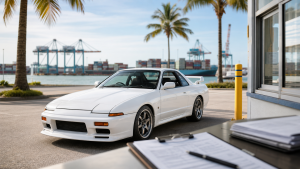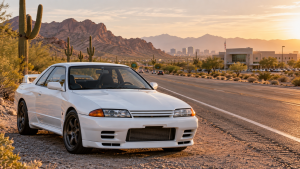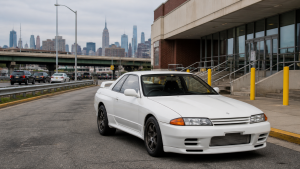
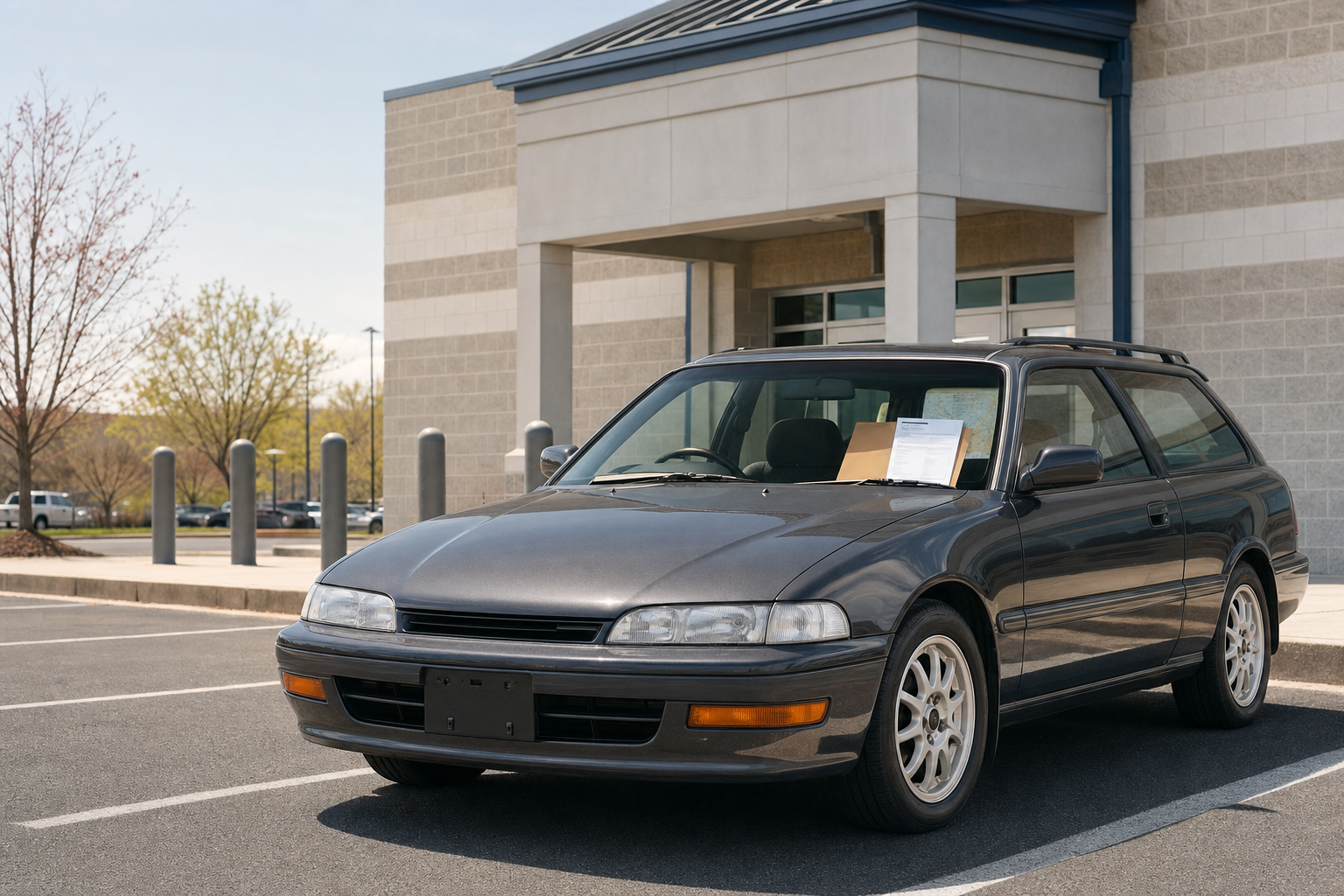
Welcome to the next article in AWIS’ JDM state registration series.
Virginia is a major JDM state for a simple reason: the demand is real. Northern Virginia has a strong enthusiast market, Hampton Roads has port and military traffic, and Virginia Beach, Norfolk, Richmond, and the D.C. suburbs all see buyers bringing in Skylines, Land Cruisers, kei trucks, Delicas, and other right-hand-drive vehicles.
Virginia can be workable for federally legal 25-year-old JDM imports, but it has its own paperwork traps.
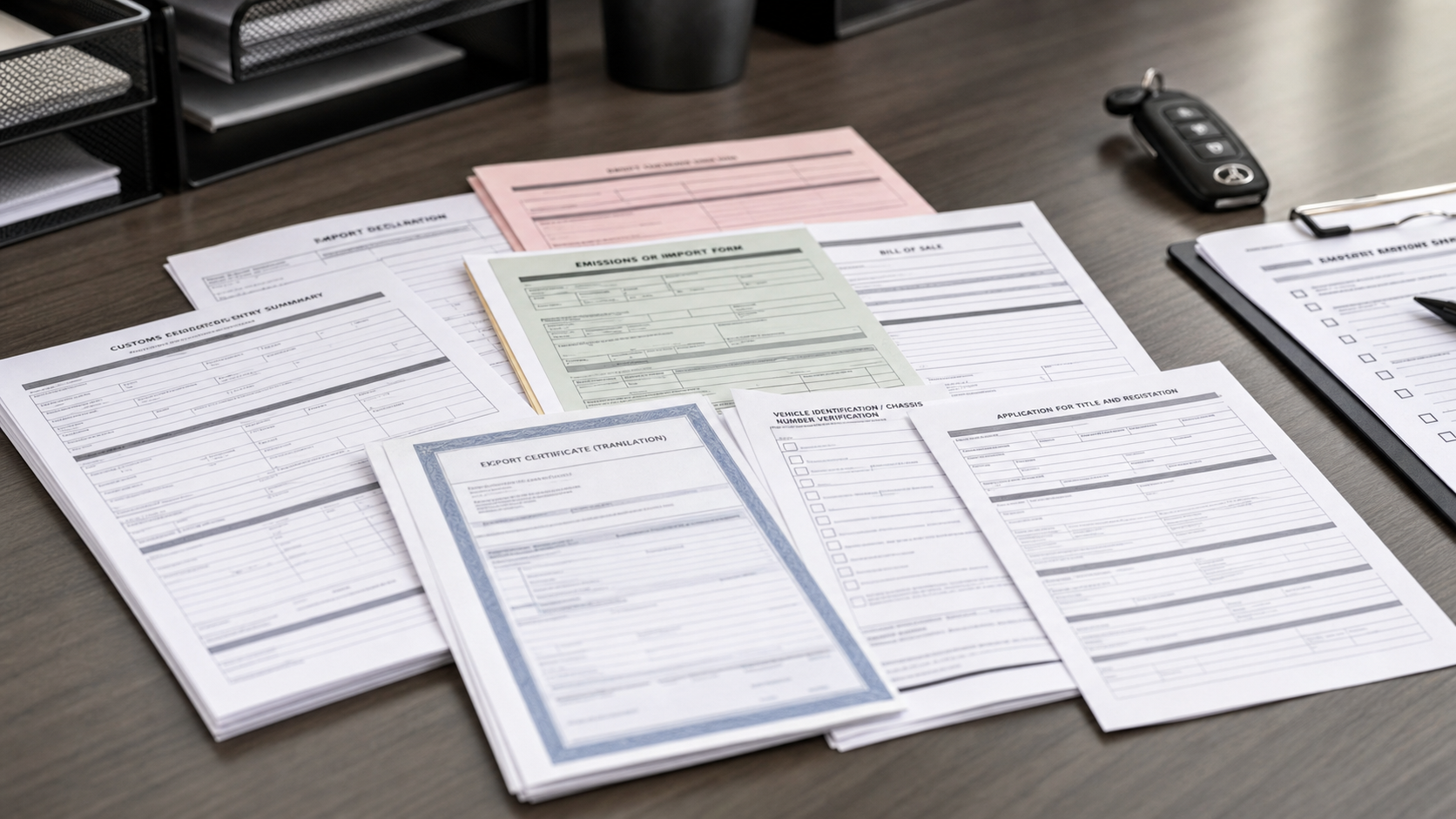
The biggest issue is not usually Customs clearance by itself. It is the handoff from the federal import packet to Virginia DMV title and registration. A vehicle can be old enough under the federal 25-year rule and still run into DMV delay if the ownership document, export certificate, Customs forms, VIN or chassis number, EPA/DOT forms, title application, taxes, inspection path, and plate choice do not line up.
Federal import approval is not Virginia title approval
The federal 25-year rule is the import gate. NHTSA says a motor vehicle that is at least 25 years old can generally be imported without meeting current Federal Motor Vehicle Safety Standards.
Virginia title and registration is a separate state process.
Virginia DMV says an imported vehicle is any vehicle brought into the United States from a foreign country, including motorcycles, Canadian vehicles, and U.S.-manufactured vehicles produced for export and later imported.
For imported vehicles less than 25 years old, Virginia DMV requires proof of compliance with, or exemption from, FMVSS before the vehicle is eligible for Virginia title and registration. Virginia law also says no foreign market vehicle manufactured 25 or more years ago is subject to that foreign-market-vehicle FMVSS proof section.
That 25-year language helps JDM buyers, but it does not eliminate the title packet. DMV still needs ownership, Customs, tax, registration, and application documents that connect the exact vehicle to the exact owner.
Virginia is very specific about imported-vehicle documents
Virginia DMV’s imported vehicle page lists the documents it expects when applying for title by mail or in person.
For a JDM import, the practical packet should include:
- Completed Virginia Application for Certificate of Title and Registration, VSA 17A
- Proof of Virginia address
- Authentic source of ownership document, such as existing title, prior registration, Manufacturer’s Certificate or Statement of Origin, or export certificate
- Bill of sale or invoice if the export certificate is assigned to an exporting company rather than directly to the applicant
- English translations for documents written only in a foreign language
- CBP Form 7501, with printed ACE electronic form or physical paper form acceptable
- CBP Form 3461
- Bill of sale or invoice that displays the VIN
- EPA Form 3520-1, if applicable
- DOT Form HS-7 and any additional requirements listed on the HS-7
- Payment for Virginia title fee, registration fee if registering, and Sales and Use Tax unless an exemption applies
Virginia DMV adds one detail JDM buyers should not miss: all Customs forms must display the VIN to verify the vehicle being imported. If there are multiple pages, submit all pages.
For a Japanese-market vehicle, “VIN” may mean the shorter Japanese chassis number rather than a U.S.-style 17-digit VIN. That is common. The problem starts when the chassis number appears one way on the Japanese export certificate, another way on the bill of lading, and a third way on the CBP entry.
That is how a perfectly good Skyline gets parked by punctuation. Tiny paperwork barnacles, full DMV impact.
Keep the chassis number consistent everywhere
Most 25-year-old JDM vehicles were not built for the U.S. market and may not have a 17-digit VIN. Virginia DMV’s imported-vehicle checklist still expects the Customs forms and bill of sale or invoice to display the VIN.
For JDM imports, the goal is consistency.
Before the vehicle ships, confirm how the chassis number appears on:
- Japanese export certificate
- English translation
- Purchase invoice or bill of sale
- Auction sheet, if available
- Bill of lading
- CBP Form 7501
- CBP Form 3461
- EPA Form 3520-1
- DOT Form HS-7
- Virginia VSA 17A title and registration application
- Insurance documents
If the vehicle is an R32 Skyline, for example, decide whether the packet will show the hyphenated chassis format or the non-hyphenated version and keep it consistent. Do not let one document drop a prefix, add a space, or substitute a model code for the actual chassis number.
Virginia DMV counters see normal 17-digit VINs all day. A short Japanese chassis number is not automatically fatal, but it needs a clean paper trail.
Ownership chain matters
Virginia DMV specifically notes that if an export certificate is assigned to an exporting company and not the applicant, the applicant must provide a bill of sale or invoice from the exporting company to establish the ownership transfer.
That matters for JDM imports because many buyers purchase through exporters, dealers, auction agents, or import companies.
Do not assume the Japanese export certificate alone proves the Virginia buyer’s ownership. If the export certificate names the exporter, Virginia may need the invoice or bill of sale connecting that exporter to the person applying for the Virginia title.
A clean ownership chain usually looks like this:
- Japanese ownership/export document identifies the vehicle
- English translation matches the vehicle and chassis number
- Exporter or seller invoice identifies the buyer and same chassis number
- Bill of sale or purchase document supports the price paid
- Customs entry documents use the same vehicle identity
- Virginia VSA 17A is completed with the same owner and same chassis number
If there is a missing seller, missing invoice, mismatched buyer name, or vague “car sold as seen” paperwork with no chassis number, fix it before the DMV visit.
Virginia safety inspection is a real step for normal registration
Virginia has an annual safety inspection program.
Virginia State Police says that when a vehicle is purchased out of state and then registered in Virginia, it must be inspected once registered in Virginia. VSP also says there is no grace period after registration and recommends having the safety inspection performed before registering the vehicle when possible.
For a JDM import that will use standard plates or antique plates for general transportation, plan for the safety inspection. This can matter for right-hand-drive vehicles, kei trucks, older lighting, glass, tires, seat belts, mirrors, wipers, and any modifications.
The inspection is not a Customs issue. It is a Virginia road-use issue.
Before buying, look at the actual vehicle condition, not only the auction grade. A clean import packet does not make bald tires, inoperative lights, missing mirrors, cracked glass, or unsafe brakes pass inspection.
Emissions rules depend on location, age, fuel, and use
Virginia emissions rules are more favorable for many 25-year-old JDM imports than some buyers expect, but the details matter.
Virginia DMV says emissions inspection requirements apply when the vehicle is garaged in these localities:
- Arlington County
- Fairfax County
- Loudoun County
- Prince William County
- Stafford County
- City of Alexandria
- City of Fairfax
- City of Falls Church
- City of Manassas
- City of Manassas Park
Virginia DMV also lists an exemption for gasoline-powered passenger or property-carrying vehicles with a model year more than 25 years old before January 1 of the current calendar year. DMV says vehicles 25 years old or older qualify as antique motor vehicles but do not have to display antique license plates to qualify for that emissions exemption.
That is a key Virginia point.
A federally legal 25-year-old gasoline JDM import may often be outside the emissions test requirement because of age, even if the owner uses standard plates. But do not treat that as a universal shortcut. Diesel rules are different. Vehicle classification, model year, GVWR, fuel type, locality, and DMV or DEQ records can still affect the answer.
If the vehicle will be garaged in Northern Virginia or another listed emissions area, confirm the emissions status before the title and registration appointment.
Antique plates can help, but they are not daily-driver plates
Virginia’s antique vehicle path is attractive because the age threshold matches many JDM imports.
Virginia DMV says a passenger vehicle, trailer, semi-trailer, or motorcycle with a model year more than 25 model years old before January 1 of the current calendar year may qualify as antique. Owners may choose antique, vintage, or standard plates depending on how they plan to use the vehicle.
But antique plates come with restrictions.
For show or collector use, Virginia says antique or permanent vintage plates limit use to activities like antique car club events, exhibits, tours, parades, testing, repairs, maintenance, sale activity, transportation to and from those events, and occasional pleasure driving not more than 250 miles from the owner’s residence. DMV says the vehicle may not be used for general daily transportation, including driving to and from work.
DMV also requires the owner to certify that they own or have regular use of another vehicle without antique plates for daily use and that the antique vehicle can be driven safely on Virginia highways.
Virginia State Police says antique vehicles registered as antique are exempt from state inspection, but the owner must certify that the vehicle meets the safety equipment requirements for its model year and is in safe operating condition. That is a self-inspection responsibility, not a permission slip to run unsafe equipment.
If the buyer wants to daily-drive the JDM vehicle, standard plates are usually the cleaner path. Virginia DMV says antique vehicles used for everyday driving need standard plates or qualifying vintage plates registered for general transportation, regular registration renewal, and an annual safety inspection sticker.
In short: antique plates may fit a weekend GT-R. They do not turn a collector car into a commuter with no rules attached.
Virginia Sales and Use Tax can still apply
Virginia DMV says it collects 4.15% Motor Vehicle Sales and Use Tax at the time of titling when a vehicle is sold or ownership changes. The amount due is based on the vehicle’s gross sales price, or $75, whichever is greater.
For JDM imports, bring value support:
- Purchase invoice
- Bill of sale
- Auction sheet if available
- Payment records if needed
- Translation if the price evidence is in Japanese
- Any repair or condition documentation that supports the stated value
Virginia also lists certain exemptions, including a common first-time Virginia titling exemption when the owner already holds a valid title or registration in their name from another state or a branch of the U.S. Armed Forces. But if the vehicle was purchased within the last 12 months, DMV says proof that SUT was paid elsewhere is needed for that exemption.
For a fresh Japan import, most buyers should expect Virginia tax questions. Do not show up with a vague invoice and hope the counter can price a 25-year-old Japanese-market vehicle from memory. That is not a system built for obscure trim codes and auction sheets.
Common Virginia JDM registration delays
The most common Virginia delay points are practical:
- Customs forms do not display the chassis number clearly
- CBP 7501 or CBP 3461 is missing from the title packet
- Only a broker worksheet is saved instead of official Customs forms
- Export certificate is assigned to an exporter, but no invoice or bill of sale connects the exporter to the Virginia applicant
- Bill of sale or invoice does not display the VIN or chassis number
- Japanese ownership documents are not translated into English
- Chassis number formatting changes across documents
- EPA 3520-1 or DOT HS-7 is missing from the import file
- Buyer assumes federal 25-year eligibility means DMV will ignore state title requirements
- Buyer chooses antique plates but plans to daily-drive the vehicle
- Vehicle is garaged in a Virginia emissions locality and the buyer has not confirmed exemption status
- Vehicle is not ready for Virginia safety inspection under the intended registration path
- Sales and Use Tax support is weak or inconsistent
Most of these can be avoided before the vessel lands.
Should Virginia buyers import JDM vehicles?
Often, yes.
Virginia can be a practical state for federally legal 25-year-old JDM imports when the buyer plans the Customs-to-DMV handoff early.
A Virginia import may make sense if:
- The vehicle is old enough under the federal 25-year rule
- The Japanese export certificate and English translation are ready
- The ownership chain from seller or exporter to buyer is clear
- CBP 7501, CBP 3461, EPA 3520-1, and DOT HS-7 are saved in the file
- The chassis number is consistent across every document
- The buyer understands whether standard, antique, or vintage plates fit the intended use
- The buyer checks safety inspection and emissions requirements before registration
- Sales and Use Tax support is ready before the DMV appointment
It may not make sense if the seller cannot prove ownership, the vehicle has unclear chassis records, the buyer needs it as a daily driver but wants antique plate treatment, or the import packet is missing official federal documents.
Bottom line
Virginia is usually manageable for 25-year-old JDM imports, but it is document-sensitive.
The state wants a complete title packet, official Customs forms, a clean ownership chain, English translations where needed, consistent VIN or chassis number records, and a registration path that matches how the vehicle will actually be used.
AWIS can help with the Customs side of a JDM import, including entry planning, CBP paperwork coordination, duty, EPA/DOT documentation, and release planning. For Virginia title and registration, confirm requirements with Virginia DMV, Virginia State Police for inspection questions, Virginia DEQ where emissions questions apply, and the correct DMV service center before purchase or arrival.
This article is general information, not legal advice. Virginia requirements can change, DMV counter practices may vary, and emissions, inspection, tax, title, and plate rules can depend on model year, vehicle classification, owner status, locality, fuel type, and intended use. Confirm requirements directly before purchase.
Sources reviewed
- Virginia Department of Motor Vehicles, Title an Imported Vehicle in Virginia
- Virginia Department of Motor Vehicles, Title Your Vehicle or Trailer
- Virginia Department of Motor Vehicles, Emissions Inspections
- Virginia Department of Motor Vehicles, Antique Motor Vehicles and Trailers
- Virginia Department of Motor Vehicles, Motor Vehicle Sales and Use Tax
- Virginia State Police, Vehicle Inspection FAQs
- Virginia State Police, Antique Vehicle Registration
- Code of Virginia § 46.2-602, Titling and registration of foreign market vehicles
- U.S. Customs and Border Protection, Importing a Motor Vehicle
- NHTSA, Importation and Certification FAQs