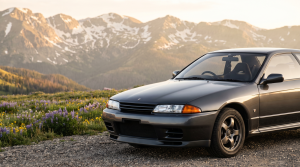
The 25-year import rule just opened the door to 2001-model Japanese domestic market vehicles. Skyline R34s, Silvia S15s, Evo VIIs, Honda Integra Type Rs — cars that were illegal to import last year are now crossing the border legally.
But getting the car to port is the easy part. Getting it through customs without holds, penalties, or seizure is where most first-time importers run into trouble.
Here’s what the customs clearance process actually looks like for a 2001 JDM vehicle, what documentation you need, and where things go wrong when importers try to cut corners.
The 25-Year Exemption: What It Actually Exempts
Vehicles manufactured 25 or more years ago are exempt from two federal requirements that normally block foreign-market cars:
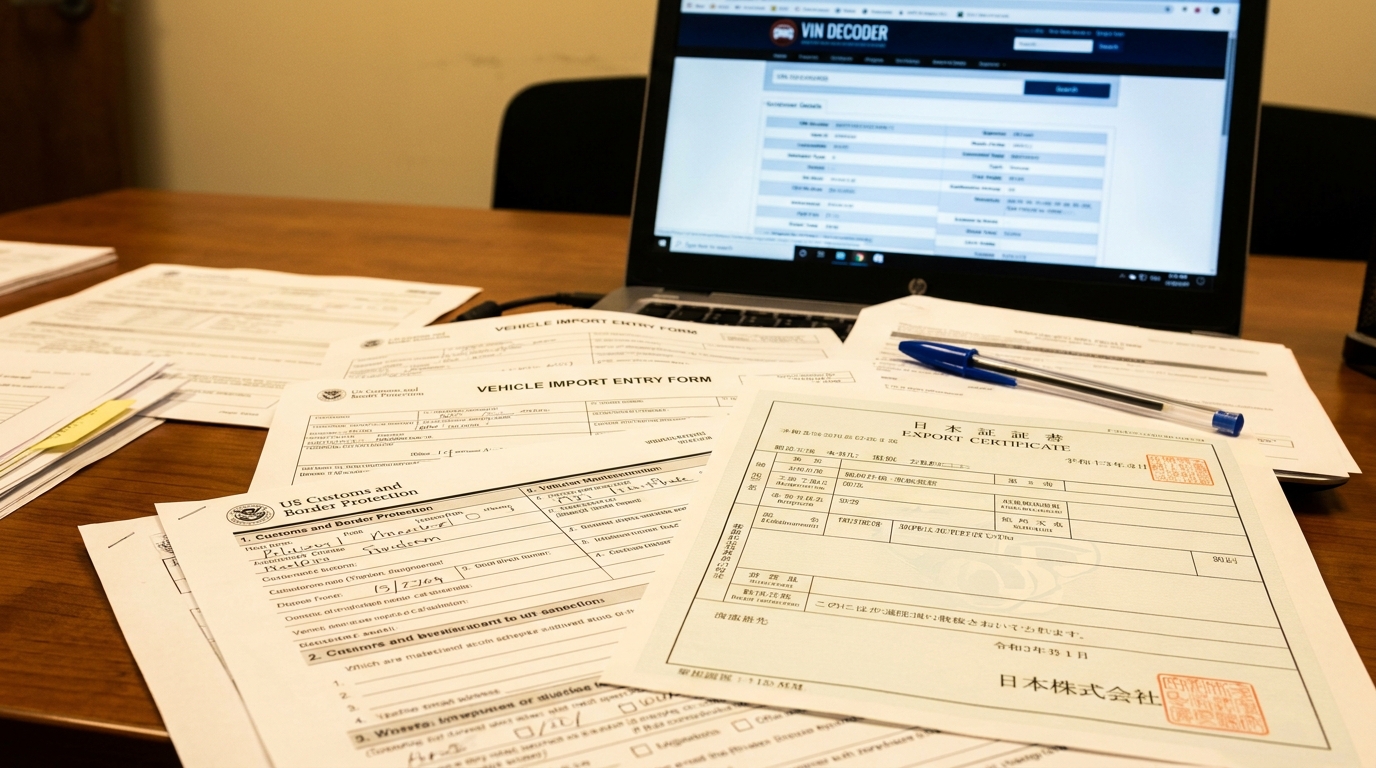
- DOT/FMVSS compliance — The vehicle doesn’t need to meet Federal Motor Vehicle Safety Standards. No crash testing, no modifications to airbags, lighting, bumpers, or structure. Your customs broker files DOT form HS-7 declaring the vehicle qualifies under the age exemption (Box 2B).
- EPA emissions compliance — The vehicle is exempt from Clean Air Act standards. Your broker files EPA form 3520-1 using Code E (vehicle is 21+ model years old). No catalytic converter modifications, no emissions testing for federal entry.
These exemptions apply to vehicles with a manufacture date in calendar year 2001 or earlier. The VIN encodes the model year — position 10 in the VIN string. Your broker verifies this against the Japanese export certificate before filing.
What it doesn’t exempt: State-level requirements. California requires CARB exemption for vehicles 1976 and newer. Some states require physical inspections, VIN verification, or specific smog waivers before registration. Federal clearance gets the car into the country — state DMV requirements are separate.
The Customs Entry: Step by Step
Before the Vehicle Arrives
ISF filing (Importer Security Filing) — Required at least 24 hours before the vessel departs the foreign port. Also called the “10+2 filing.” Your customs broker needs:
- Manufacturer name and address (the Japanese OEM)
- Seller name and address (the Japanese auction house or dealer)
- Buyer name and address (you)
- Ship-to address
- HTS classification (typically 8703.23 or 8703.24 depending on engine displacement)
- Container stuffing location (if containerized)
Late ISF filings result in $5,000 penalties per occurrence. This is one of the most common mistakes with first-time importers who find a car at auction and don’t engage a broker early enough.
At Port of Entry
Entry filing — Your customs broker files CBP Form 7501 (Entry Summary) within 15 calendar days of the vessel’s arrival. This includes:
- HTS classification — Japanese passenger vehicles fall under heading 8703. The subheading depends on engine type and displacement. A 2.6L turbocharged RB26DETT (Skyline GT-R) classifies differently than a 1.5L naturally aspirated engine. Getting this wrong means paying the wrong duty rate.
- Duty calculation — The base duty rate for passenger vehicles under HTS 8703 is 2.5%. But the current tariff environment adds layers. Section 232 tariffs on autos (25%) now apply to imported vehicles. Your broker needs to verify whether any exclusions apply to your specific entry.
- EPA form 3520-1 — Filed at entry. Code E for 25-year exemption. Your broker handles this, but the importer of record (you) is responsible for accuracy.
- DOT form HS-7 — Filed at entry. Box 2B declaration for vehicles exempt by age. This tells NHTSA the vehicle doesn’t need to comply with FMVSS.
- CBP bond — A continuous or single-entry customs bond is required. Your broker arranges this. Continuous bonds cover all your imports for a year. Single-entry bonds cover one shipment.
After Entry
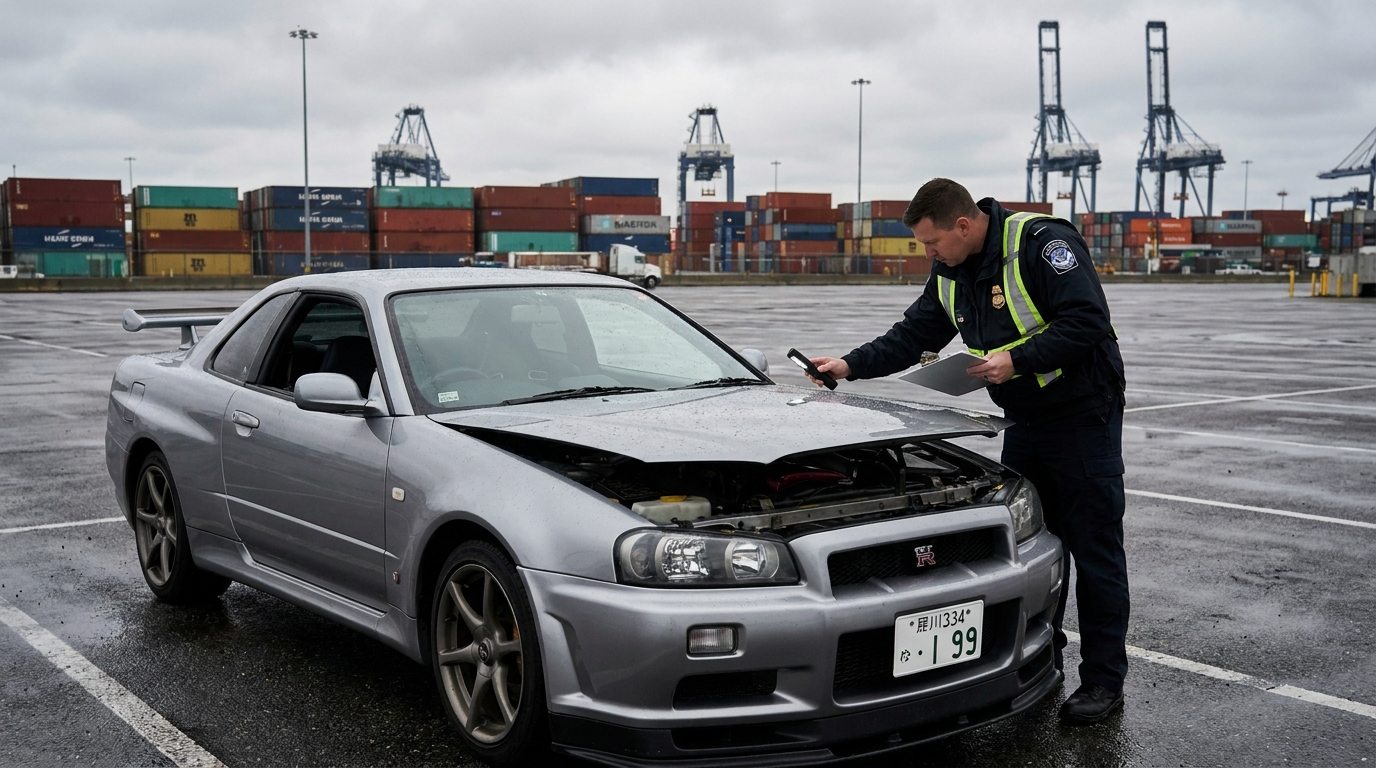
CBP examination — Not every vehicle gets examined, but CBP can pull any entry for inspection. They’ll verify the VIN matches the paperwork, check for undeclared modifications, and confirm the vehicle matches the declared HTS classification. If the car was modified to look like a different model (a common issue with federalized conversions), that’s a red flag.
Duty payment — Due within 10 working days of entry. Your broker submits payment through ACE (Automated Commercial Environment).
Release — Once duties are paid and no holds exist, CBP releases the vehicle. Your broker provides the release documentation you need for port pickup and eventually for state registration.
Where Things Go Wrong
Wrong HTS Classification
The difference between 8703.23 (1500cc-3000cc spark-ignition) and 8703.24 (over 3000cc) matters for duty calculations. A Skyline GT-R with the RB26DETT (2,568cc) classifies under 8703.23. An Aristo with the 2JZ-GTE (2,997cc) does too — barely. A Toyota Century with the 1GZ-FE (4,996cc V12) goes to 8703.24. Misclassification triggers penalties and delays.
Late or Missing ISF
If your broker doesn’t file the ISF before the vessel sails, you’re looking at a $5,000 fine. This happens when importers buy at Japanese auction on Monday and the car ships Thursday, and nobody engaged a customs broker until the car is already on the water.
Undeclared Modifications
CBP looks for vehicles that were modified to appear as something they’re not. Engine swaps, VIN plates that don’t match, structural changes. If you bought a car at auction that was already modified in Japan, make sure your broker knows exactly what the car is. Surprises at inspection are expensive.
State Registration Issues
Federal clearance is not the same as state registration. California’s CARB requirements catch many importers off guard. Some states require a physical safety inspection. Hawaii has specific fumigation requirements for vehicles arriving from overseas. Your customs broker handles the federal side — but someone needs to handle the state side too, and many importers don’t think about it until they’re standing at the DMV.
What a Good Customs Broker Does for You
A customs broker isn’t just filing paperwork. For JDM imports specifically, they should:
- Verify the vehicle’s eligibility before it ships (manufacture date, VIN decode, modification status)
- File the ISF on time — before the vessel departs
- Classify the vehicle correctly under HTS
- Calculate duties including any applicable tariff surcharges
- File EPA 3520-1 and DOT HS-7 accurately
- Monitor the entry through CBP and respond to any holds or requests for information
- Provide release documentation for port pickup
- Advise on state-specific requirements for registration
AWIS handles JDM vehicle clearances at every major US port. We’ve cleared Skylines, Silvias, Supras, Lancers, Integras, and everything in between. If you’re buying at auction in Japan or importing through a dealer, talk to us before the car ships — not after it’s sitting at port racking up storage fees.
Get Started
If you’re importing a 2001 (or older) JDM vehicle, contact us for a clearance quote:
📞 (817) 795-2947
📧 info@awis.us
🌐 awis.us
We’ll walk you through the documentation, timeline, and costs before you commit to a purchase.