Welcome to the first article in AWIS’ JDM state registration series.
We are starting with California because it is the state most likely to surprise importers. A JDM vehicle can clear U.S. Customs and still be difficult, expensive, or impossible to register in California.
That is not a Customs problem. It is a state registration and emissions problem.
If you are importing a 25-year-old JDM vehicle and plan to title it in California, read this before the car ships.
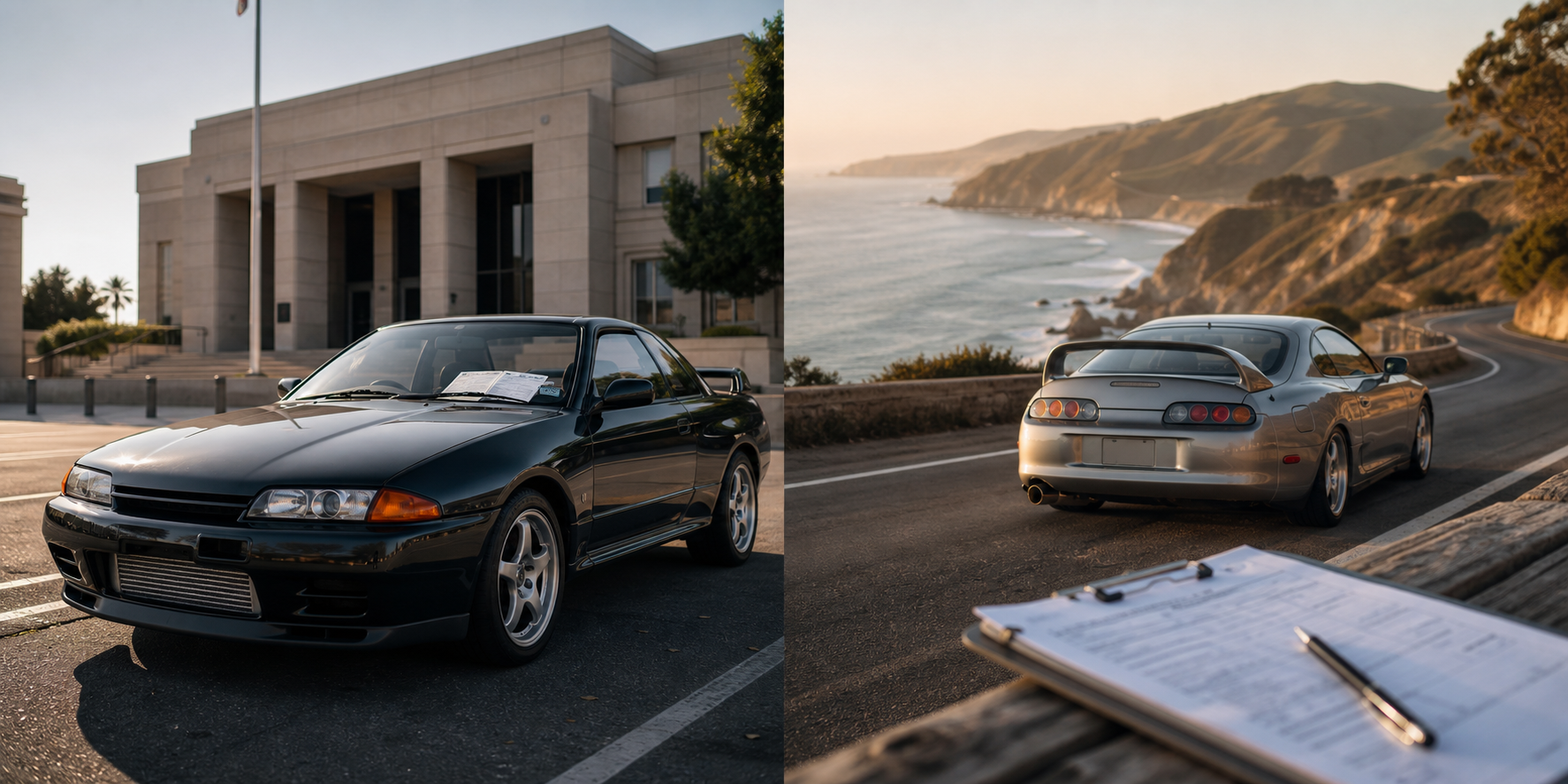
Federal import approval is not California registration approval
The federal 25-year rule is often misunderstood.
A vehicle that is at least 25 years old may be exempt from current Federal Motor Vehicle Safety Standards for import purposes. That can help the vehicle enter the United States.
California registration is a separate issue.
California DMV says imported vehicles must meet requirements from multiple agencies, including CBP, EPA, DOT, IRS, CARB, and state tax authorities. California also warns that some imported vehicles cannot be registered in California.
In plain English: clearing Customs does not mean the DMV will hand you plates.
California emissions rules are the hard part
California’s issue is usually emissions.
If a direct foreign import vehicle was not originally manufactured to meet California emissions standards and DOT FMVSS, California DMV states that the vehicle cannot be registered unless it is modified and tested under CARB’s direct import program.
That is a big deal for JDM vehicles.
Many JDM cars were not built for the U.S. market. They may not have California emissions labels, U.S. certification labels, or required equipment. Even if they are federally importable because of age, California may still require proof that the vehicle qualifies for registration.
Do not assume a normal smog check solves it
A standard smog check is not the same as CARB direct-import compliance.
Some importers assume they can bring the car in, visit a smog station, make a few fixes, and register it. That may not work. California can require a more specific direct-import process, laboratory testing, emissions modifications, referee review, or supporting documentation.
The exact path depends on the vehicle.
Before buying, confirm what California will require for the exact year, make, model, engine, and configuration.
Diesel, motorcycles, and off-highway vehicles have extra problems
California DMV states that motorcycles, off-highway vehicles, and diesel-powered vehicles cannot be converted to California emissions standards at this time. According to DMV, those vehicles cannot be registered in California unless they were originally manufactured to meet U.S. and California emissions standards.
That can be a deal-killer.
Do not buy first and research later if the vehicle falls into one of these categories.
Documents California buyers should gather early
For a JDM vehicle headed to California, gather more than the Customs packet.
You may need:
- Japanese export certificate
- Certified English translation
- Bill of sale or invoice
- CBP entry documents
- EPA Form 3520-1
- DOT HS-7
- Bill of lading
- Odometer information, if applicable
- Emissions labels or manufacturer documentation, if available
- CARB/direct import documentation, if required
- Proof of tax or use tax payment
The exact DMV requirements can vary by vehicle and transaction. The point is simple: get the California path confirmed before the car is on the water.
Common California JDM mistakes
The most common mistakes are predictable:
- Assuming “25 years old” means “California legal.”
- Buying a car before checking CARB requirements.
- Relying on an out-of-state title as a shortcut.
- Assuming a standard smog station can clear a direct import.
- Ignoring diesel, motorcycle, or off-highway restrictions.
- Waiting until after Customs release to ask DMV questions.
The fifth one is especially painful. By then the car is already here, the money is spent, and the DMV counter is about to ruin someone’s week.
Should California buyers still import JDM vehicles?
Sometimes, yes. But California buyers need to be more careful than buyers in many other states.
A California import may make sense if:
- The vehicle has a clear registration path
- CARB compliance is confirmed before purchase
- The buyer understands the cost and timing
- The vehicle documentation is complete
- The buyer is prepared for extra review
It may not make sense if the buyer is counting on a simple DMV visit after Customs release.
Bottom line
California is not impossible, but it is not forgiving.
For JDM imports, federal eligibility and California registration are two different gates. The 25-year rule may help with federal importation, but California emissions and DMV rules can still block registration.
AWIS can help with the Customs side of a JDM import, including entry documents, duty, EPA/DOT paperwork coordination, and release planning. For California registration, confirm DMV and CARB requirements before the vehicle ships.
This article is general information, not legal advice. California DMV and CARB requirements can change. Confirm requirements directly with California DMV, CARB, or a qualified registration specialist before purchase.