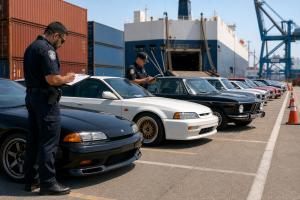
Welcome to the next article in AWIS’ JDM state registration series.
Pennsylvania matters for JDM imports because it has a strong enthusiast market, active buyers around Philadelphia, Pittsburgh, Harrisburg, and the Lehigh Valley, and a title process that has one state-specific trap: PennDOT treats 25-year-rule imports differently from a normal out-of-state transfer.
A federally legal 25-year-old JDM import can often be titled and registered in Pennsylvania, but Customs clearance is not the same thing as Pennsylvania title approval. PennDOT still wants the imported-vehicle packet, proof of ownership, VIN or chassis number verification, Pennsylvania insurance if registration is requested, tax and fee handling, and, for older imported vehicles, an Enhanced Safety Inspection path.
The main Pennsylvania-specific points are Form MV-1 through an authorized agent, original ownership documents, English translations, kilometer-to-mile conversion, acceptable CBP entry paperwork, DOT HS-7, EPA paperwork where applicable, VIN tracing or verification, Pennsylvania sales tax, Enhanced Safety Inspection with Form MV-426B for qualifying older imports, and antique/classic plate choices if the vehicle will be used as a collector vehicle.
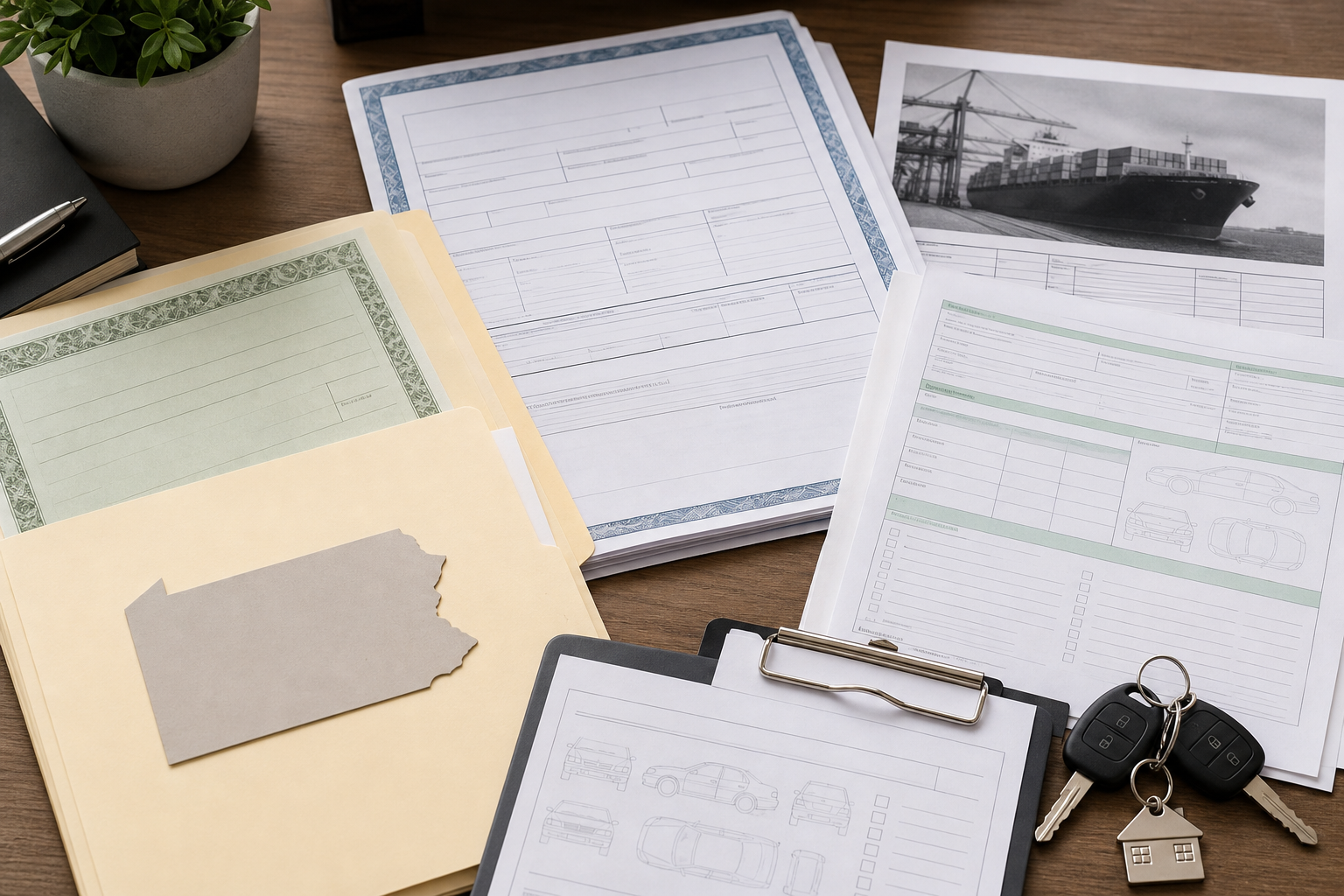
Federal import clearance is not Pennsylvania registration approval
The federal 25-year rule is the import gate. CBP’s motor vehicle import guidance points importers to ownership and shipping documents, Customs entry and release paperwork, EPA Form 3520-1, and DOT Form HS-7. NHTSA explains that many nonconforming vehicles less than 25 years old generally need a Registered Importer path, while vehicles at least 25 years old may qualify for the age-based DOT exemption.
Pennsylvania title and registration are separate state steps.
That means a Skyline, Land Cruiser, HiAce, Delica, Pajero, Silvia, Chaser, Crown, kei truck, or other Japanese-market vehicle may clear Customs as a 25-year-old import, but PennDOT still has to accept the title packet. The state will care about ownership, identity, translations, inspection path, insurance, taxes, and how the vehicle is going to be registered.
Federal clearance gets the car into the country. Pennsylvania paperwork gets it a plate. Different gate, different line, same chance for one missing form to ruin the afternoon.
Pennsylvania uses Form MV-1 through an authorized agent
PennDOT says an applicant titling an imported vehicle must submit a completed Form MV-1, “Application for Certificate of Title,” from an authorized agent. The authorized agent completes the MV-1 application, and the applicant’s signature must be notarized.
For a JDM buyer, this matters because Form MV-1 is not usually a do-it-yourself online form. Pennsylvania commonly routes title work through authorized agents, notaries, dealers, messenger services, or PennDOT’s Riverfront Office Center in Harrisburg.
PennDOT’s out-of-state transfer guidance also says a Pennsylvania title and registration application generally needs proof of Pennsylvania insurance if registration is requested, a valid Pennsylvania ID credential, VIN tracing or verification, and the correct title, lien, registration fees, and sales tax if applicable.
For an imported vehicle, do not treat this like a normal used-car transfer. Bring the import packet, not just a bill of sale and a set of keys.
PennDOT’s imported vehicle packet is document-heavy
PennDOT’s Imported and Exported Vehicles Procedures fact sheet lists the documents needed for an imported vehicle title and registration application.
For a JDM import, the practical Pennsylvania packet usually includes:
- Completed Form MV-1 from an authorized agent
- Original vehicle proof of ownership documents
- English translations for documents written only in a foreign language
- Kilometer-to-mile conversion for odometer information
- VIN tracing or VIN verification by an eligible inspection mechanic or notary public employed by a full agent
- Acceptable U.S. Customs entry paperwork, such as CBP Form 7501, CBP Form 3461, or CBP Form 3461ALT, with port number, Customs stamp/seal, or both as required by PennDOT guidance
- Shipping documents showing ownership and how the vehicle entered the United States, such as bill of lading and shipping invoice
- DOT Form HS-7
- EPA Form 3520-1 where required by the import and title packet
- Manufacturer compliance letter or bond release letter if applicable
- Pennsylvania insurance if registration is requested
- Check or money order payable to the Commonwealth of Pennsylvania for taxes and fees
For 25-year-old JDM imports, the Customs and DOT paperwork still matters even when the vehicle qualifies for an age-based federal import exemption. A broker invoice is not a title document. A freight invoice is not a Customs entry. And “the exporter said it’s fine” is not a PennDOT category, as much as everyone wishes it were.
The 25-year import rule has a Pennsylvania inspection wrinkle
PennDOT’s imported-vehicle fact sheet makes a point that JDM buyers should not miss: motor vehicles manufactured more than 25 model years ago that meet the import exemption requirements are subject to an Enhanced Safety Inspection and must have Form MV-426B completed by the enhanced safety inspection station.
PennDOT also says that after passing the enhanced inspection, these vehicles will receive an “F” brand on the Pennsylvania title. The fact sheet identifies the “F” brand as “Originally Mfd. For Non-U.S. Distribution but in compliance with FMVSS.”
This is the Pennsylvania-specific delay point.
Many buyers assume a 25-year-old import is easier because it avoids the Registered Importer path at the federal level. That may be true for import entry, but Pennsylvania adds its own title handling for older imported vehicles. If the owner does not plan for the enhanced inspection and MV-426B process, the car can clear Customs and still sit while the title file catches up.
Before buying, Pennsylvania JDM buyers should call an authorized PennDOT agent and an Enhanced Vehicle Safety Inspection Station that has handled imported vehicles before.
Enhanced Vehicle Safety Inspection is not the same as a normal annual sticker
PennDOT’s Enhanced Vehicle Safety Inspection page says only safety inspection stations appointed and under contract with PennDOT as Enhanced Vehicle Safety Inspection Stations may inspect reconstructed, flood, specially constructed, recovered theft, collectible, modified vehicles, and street rods for title purposes.
PennDOT’s imported-vehicle fact sheet separately points older import-exemption vehicles into the enhanced inspection and MV-426B process.
That does not mean every JDM import is modified or reconstructed. It means Pennsylvania has a specific enhanced title path for these older imported vehicles. The buyer should not wait until after arrival to find out which station can perform the inspection, what photos or documents the station wants, and whether the vehicle equipment condition creates a problem.
For JDM vehicles, this is where right-hand drive, lighting, tires, glass, chassis number location, odometer units, and vehicle condition can become practical inspection issues. Confirm the current inspection requirements with PennDOT and the chosen station before the vehicle is at the end of a driveway with no plate.
VIN and chassis number consistency matters in Pennsylvania
PennDOT requires a tracing or verification of the vehicle identification number for the MV-1 title application. For many older Japanese-market vehicles, the identity number may be a chassis number rather than a 17-digit U.S.-style VIN.
That can be workable, but only if the paperwork is consistent.
Before the Pennsylvania title appointment, compare the number across:
- Japanese export certificate or foreign registration document
- English translation
- Bill of sale
- Auction invoice or auction sheet, if available
- Bill of lading
- CBP Form 7501, 3461, or 3461ALT
- DOT Form HS-7
- EPA Form 3520-1, if used
- Form MV-1
- Form MV-426B, if applicable
- Insurance documents
Keep prefixes, hyphens, spaces, zeros, and model codes consistent where possible. If the vehicle is identified as BNR32-012345 on one document, BNR32012345 on another, and 012345 on a third, the vehicle may still be the same car. But PennDOT, the agent, and the inspection station should not have to solve a chassis-number Sudoku puzzle.
English translations and odometer conversion should be ready early
PennDOT says English translations are required for all documents written exclusively in a foreign language. The imported-vehicle guidance also notes that kilometers must be converted to U.S. miles.
For JDM imports, this usually affects the Japanese export certificate, deregistration document, auction paperwork, and sometimes invoices or ownership documents.
The translation should clearly preserve:
- Vehicle make
- Vehicle model or model code
- Manufacture date or first registration date shown on the Japanese document
- Chassis number
- Registered owner or exporter information
- Deregistration or export status
- Odometer reading and kilometer-to-mile conversion
- Any lien, ownership, or remarks shown on the source document
Do not let the translation “clean up” the document by dropping the chassis number or changing the vehicle identity. A pretty translation that loses the number trail is not helpful. It is just a prettier problem.
Pennsylvania emissions rules depend on county, plate type, and vehicle facts
Pennsylvania has regional emissions inspection requirements. PennDOT’s emissions program page points owners to regional testing information for the Pittsburgh, Philadelphia, South Central, Northern, and other county areas. Pennsylvania DEP’s Clean Vehicle Program FAQ also notes that vehicles registered in one of the 25 Pennsylvania counties that require annual emissions inspection are subject to the state’s inspection requirements.
For standard registration, buyers should verify whether the registration county requires emissions inspection and what test type applies to the vehicle’s model year, fuel type, GVWR, and equipment.
PennDOT’s emissions regulations list gasoline-powered motor vehicles with a model year of 1975 and newer, GVWR of 9,000 pounds or less, and registration in an I/M county or region as subject vehicles, with exemptions including current model year vehicles and vehicles driven less than 5,000 miles per year. The same regulation also lists classic, antique, or collectible motor vehicles as exempt from emissions inspection.
The practical takeaway: Pennsylvania emissions may be manageable for many 25-year-old JDM imports, but do not assume federal age eligibility alone answers the emissions question. County, plate type, model year, fuel type, and registration category matter.
Antique and classic plates can help, but they limit the conversation
Pennsylvania offers antique, classic, and collectible registration plates through Form MV-11.
PennDOT’s MV-11 form and antique/classic fact sheet define an antique motor vehicle as a motor vehicle, not a reproduction, manufactured more than 25 years prior to the current year and maintained in or restored to a condition substantially in conformity with manufacturer specifications and appearance. A classic motor vehicle is manufactured at least 15 years prior to the current year and maintained or restored to substantially conform with manufacturer specifications and appearance.
PennDOT says antique and classic registration plates are permanent for the life of the vehicle while owned by the present owner. It also says antique and classic plates may not be displayed on a vehicle used to transport people or property.
Inspection treatment differs:
- Classic vehicles are subject to annual vehicle safety inspection.
- Antique vehicles are not subject to annual vehicle safety inspection.
- Antique and classic vehicles are not subject to emissions inspection.
- MV-11 also says collectible vehicles are subject to annual safety inspection and are not subject to emissions inspection.
That can be useful for a collector JDM vehicle, but plate choice should match real use. If the buyer plans to commute, use the car frequently, haul property, or treat it as ordinary transportation, standard registration may be the cleaner path. Antique plates are not a magic daily-driver button.
Pennsylvania sales tax and fees still apply
PennDOT’s imported-vehicle fact sheet says Pennsylvania sales tax is due on the purchase price of the vehicle and notes that no sales tax exemption is available for military personnel. It also lists checks or money orders payable to the Commonwealth of Pennsylvania for fees.
The fact sheet gives special military tax handling details, including different treatment based on whether the vehicle was owned more than six months or less than six months before applying for Pennsylvania title, and notes the base 6% tax rate, 7% for Allegheny County residents, and 8% for City of Philadelphia residents.
For JDM imports, value support can be messy because the purchase price may be spread across auction invoice, exporter invoice, inland Japan transport, ocean freight, duty, broker fees, and arrival charges.
Keep a clean file with:
- Purchase invoice or bill of sale
- Auction invoice or auction sheet, if available
- Payment records, if needed
- Customs entry documents showing declared value
- Freight and landed-cost backup, if requested
- English translations for non-English value or ownership documents
Paying Customs duty does not automatically settle Pennsylvania sales tax, registration fees, title fees, agent fees, or inspection costs.
Practical Pennsylvania title packet for a 25-year-old JDM import
For a federally legal 25-year-old JDM import going into Pennsylvania, a practical packet should usually include:
- Japanese export certificate or foreign registration/deregistration document
- English translation of each foreign-language document
- Kilometer-to-mile odometer conversion
- Bill of sale chain showing ownership transfer to the Pennsylvania applicant
- Purchase invoice and value support
- Bill of lading and shipping invoice
- CBP Form 7501, 3461, or 3461ALT, as applicable
- Any other CBP release or entry documents applicable to the shipment
- DOT Form HS-7
- EPA Form 3520-1 if used or required for the import file
- Proof the vehicle is more than 25 model years old for the Pennsylvania import-exemption path
- Form MV-1 completed through an authorized agent
- VIN/chassis tracing or verification
- Form MV-426B through an Enhanced Vehicle Safety Inspection Station, if applicable
- Pennsylvania insurance if registration is requested
- Pennsylvania ID credential
- Tax and fee payment support
- Form MV-11 if applying for antique, classic, or collectible plates
- Photos required for antique, classic, or collectible plate applications, if applicable
The exact packet can vary by owner facts, vehicle age, vehicle type, document history, inspection path, plate choice, and PennDOT handling. Call the authorized agent and Enhanced Vehicle Safety Inspection Station before the car arrives if anything is unusual.
Common Pennsylvania JDM registration delays
The most common Pennsylvania delay points are avoidable:
- Buyer does not have the original foreign ownership document
- Japanese documents are not translated into English
- Kilometer readings are not converted to miles for the title file
- Bill of sale chain does not connect the foreign owner or exporter to the Pennsylvania applicant
- Chassis number format changes across Customs, ownership, shipping, insurance, and Pennsylvania forms
- Buyer brings a broker worksheet but not official CBP entry paperwork
- CBP Form 7501, 3461, or 3461ALT lacks the port number, Customs stamp/seal, or backup PennDOT expects
- DOT HS-7 is missing
- EPA paperwork status is unclear
- VIN tracing or verification was not planned with a qualified agent, mechanic, or notary
- Buyer does not know that older 25-year-rule imports may need Enhanced Safety Inspection and MV-426B
- Enhanced inspection station has not been selected before arrival
- Pennsylvania insurance is not ready when registration is requested
- County emissions requirements were not checked for standard registration
- Buyer assumes antique plates allow normal daily use
- Purchase price, tax, and landed-cost support are incomplete
Most of this can be fixed before the vehicle ships. After arrival, every missing document becomes an archaeological dig with inspection stickers.
Should Pennsylvania buyers import JDM vehicles?
Often, yes. Pennsylvania can be workable for 25-year-old JDM imports if the file is prepared correctly and the buyer plans for the enhanced inspection path.
A Pennsylvania JDM import may make sense if:
- The vehicle is federally legal under the 25-year rule
- The Japanese export or registration document is clean
- English translations are ready
- Kilometer-to-mile odometer handling is documented
- The bill of sale chain is complete
- CBP entry and release paperwork is saved
- DOT HS-7 and EPA paperwork are handled correctly
- The chassis number is consistent everywhere
- An authorized PennDOT agent has reviewed the plan
- An Enhanced Vehicle Safety Inspection Station has confirmed the MV-426B path, if applicable
- Pennsylvania insurance is ready if registration is requested
- County emissions requirements have been checked for standard registration
- Antique or classic plate use matches how the car will actually be driven
- Tax and fee/value support are ready
It may not make sense if the seller cannot prove ownership, the chassis number trail is messy, the buyer cannot get translations, the car is not federally eligible, the enhanced inspection path has not been checked, or the buyer expects PennDOT to solve missing import documents after the vehicle arrives.
Bottom line
Pennsylvania is not impossible for JDM imports, but it is less casual than some buyers expect.
For a 25-year-old JDM import, the Pennsylvania handoff usually comes down to clean Customs paperwork, original foreign ownership documents, English translations, kilometer-to-mile conversion, Form MV-1 through an authorized agent, VIN/chassis verification, DOT and EPA import support, Pennsylvania insurance if registering, tax and fee support, and the Enhanced Safety Inspection and MV-426B process for older imported vehicles.
AWIS can help with the Customs side of a JDM import, including entry planning, CBP paperwork coordination, duty, EPA/DOT documentation, and release planning. For Pennsylvania title, registration, insurance, emissions, inspection, tax, and plate decisions, confirm the current requirements directly with PennDOT, an authorized PennDOT agent, the selected Enhanced Vehicle Safety Inspection Station, and the buyer’s insurance provider before purchase or arrival.
This article is general information, not legal advice. Pennsylvania requirements can change, PennDOT handling can vary, and title, tax, insurance, emissions, inspection, and plate rules can depend on model year, fuel type, GVWR, vehicle classification, owner facts, documents, county, inspection station, and intended use. Confirm requirements directly before purchase.
Sources reviewed
- PennDOT, Imported and Exported Vehicles Procedures fact sheet
- PennDOT, Import-Export FAQs
- PennDOT, Transfer Vehicle Registration from Another State
- PennDOT, Enhanced Vehicle Safety Inspections
- PennDOT, Form MV-11 Application for Permanent Antique, Classic or Collectible Registration Plate
- PennDOT, Antique, Classic Vehicles and Vintage Registration Plates fact sheet
- PennDOT, Emission Inspections Program
- PennDOT, PUB-763 Emission Inspection Program
- Pennsylvania DEP, Clean Vehicle Program
- U.S. Customs and Border Protection, Importing a Motor Vehicle
- NHTSA, Importation and Certification FAQs
- U.S. EPA, Publications and Forms for Importing Vehicles and Engines