Last updated: August 6, 2026
If you are buying a classic car overseas after July 24, do not rely on the duty number from an old quote, a seller’s listing, or a forum post. The answer may have changed.
The clean way to look at it is this: July 24 should be treated as a customs review trigger. Temporary surcharge treatment expired, newer tariff layers are showing up in import guidance, and the final duty calculation still depends on the vehicle, country of origin, HTS classification, value, Chapter 99 review, and CBP guidance in effect at entry.
For classic passenger cars, importers should expect the base Customs duty conversation to start with the vehicle duty category, then add any currently applicable tariff layers. As planning examples, many classic passenger cars that previously started at a 2.5% base duty may now need to be reviewed in the 10% to 12.5% total-duty range depending on origin and tariff treatment. That is not a blanket rate quote. It is the range buyers should use to stop a bad purchase decision before wiring funds.
AWIS can review the entry facts before the car ships, but the importer needs to collect the right information before buying. Once the vehicle is already paid for, loaded, or on the water, the options get narrower. Customs paperwork has a way of becoming very educational right after it becomes expensive.
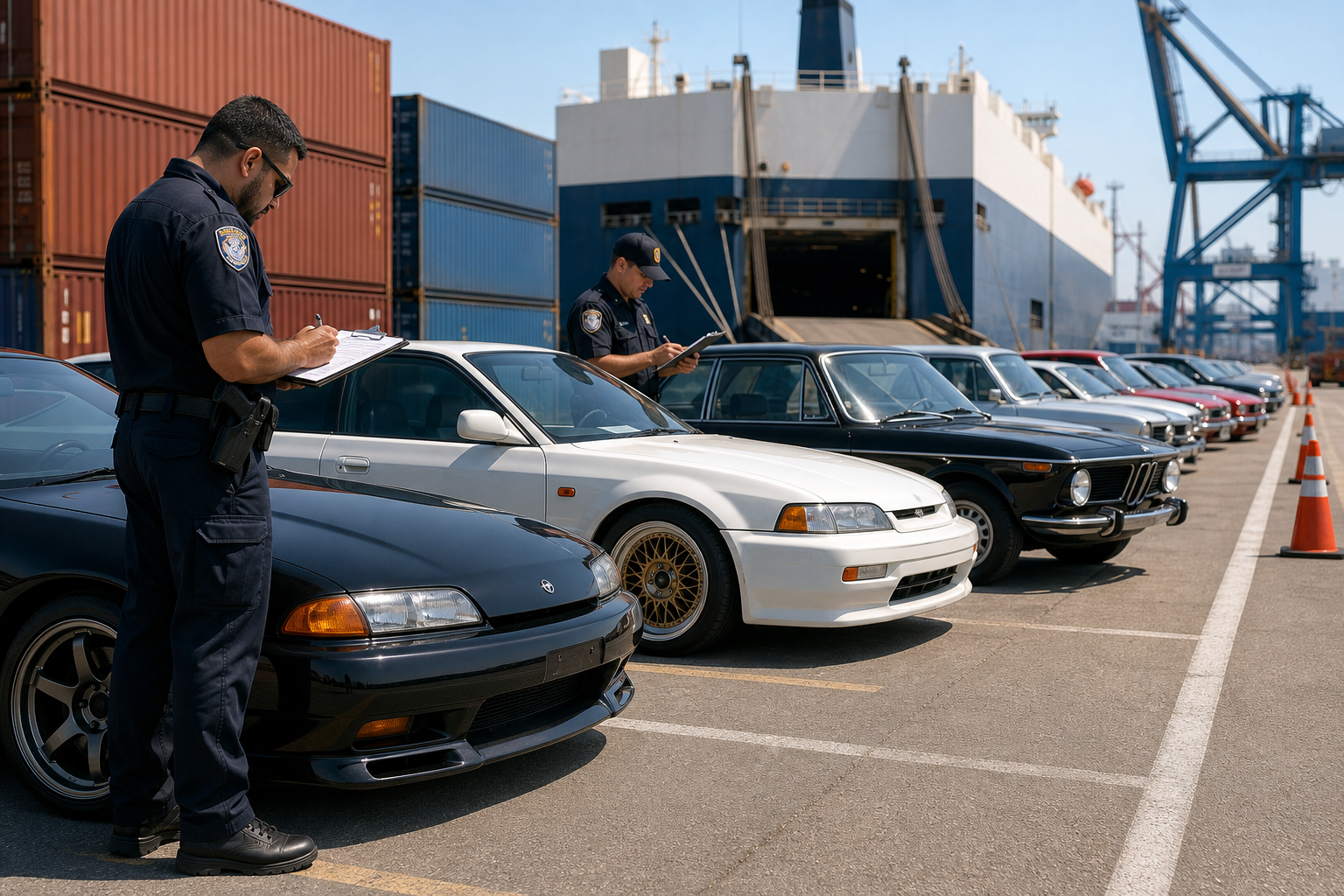
Quick answer: what changed after July 24?
The main change is that importers should not assume the short-term tariff treatment used before July 24 still applies.
The July 24 date matters because temporary surcharge treatment ended and newer Section 301 tariff structures were being reflected in importer guidance. For classic vehicle buyers, that means the duty estimate should be rebuilt before purchase instead of copied from an older import.
What did not change:
- CBP still reviews the vehicle entry based on documentation, value, origin, and classification.
- EPA and DOT admissibility still matter.
- The 25-year DOT rule is still separate from Customs duty.
- The port, bond, POA, ISF, bill of lading, and ownership documents still need to be correct.
- State title and registration issues still happen after federal import clearance.
The mistake is treating “25 years old” as “duty-free” or “paperwork-free.” It is neither.
Planning duty numbers importers should understand
Before buying, ask the broker to review the likely duty treatment using the actual vehicle details. For planning only, the common starting points are:
- Passenger cars: often start with a 2.5% base duty category before added tariff layers are reviewed.
- Trucks: can fall into a much higher base duty category, commonly discussed at 25%, depending on classification.
- Motorcycles: duty treatment varies by engine size/classification and can be low or free in some cases, but it still needs to be classified correctly.
- Post-July 24 classic passenger car planning: some origins may now need review in the 10% to 12.5% total-duty range after additional tariff layers are considered.
For example, a qualifying classic passenger car may look very different from a pickup, a kei truck, a modified utility vehicle, or a motorcycle. A seller may call all of them “classic cars,” but CBP does not clear entries based on auction adjectives.
The rate also depends on country of origin, not just where the car is purchased or loaded. A German-built vehicle bought from a dealer in the UK is not automatically treated as a UK-origin vehicle. A Japanese-built JDM vehicle bought through a European seller still needs the correct origin review.
What buyers should check before wiring money
Use this checklist before paying a deposit, wiring final funds, or booking ocean freight.
1. Confirm the exact vehicle identity
Get the year, make, model, VIN or chassis number, engine type, body style, and build date support. Do not rely only on a sales title if the car uses a chassis number or foreign registration format.
For 25-year imports, the age question needs support from reliable documents. If the vehicle is close to the eligibility date, verify before purchase.
2. Confirm the country of origin
Origin can affect tariff treatment. Ask where the vehicle was manufactured, not just where it is currently located. Keep documents that support the origin claim if available.
This matters most when the car is bought in one country but built in another. Europe and UK sourcing can create confusion here.
3. Estimate duty using classification, origin, and value
A duty estimate is not just “purchase price times a rate.” The broker needs the likely HTS classification, country of origin, declared value, applicable Chapter 99 tariff layers, and any vehicle-specific facts that could change treatment.
If the vehicle is a truck, pickup, motorcycle, kit car, replica, race car, parts shipment, or heavily modified unit, do not assume the passenger-car rate applies.
4. Check EPA and DOT admissibility separately
Customs duty is only one part of the import. EPA and DOT still control whether the vehicle can be legally imported and released under the claimed path.
For many classics, the 25-year DOT rule and EPA treatment may be favorable, but the importer still needs the right declarations and documents. DOT eligibility does not erase Customs duty. EPA treatment does not solve HTS classification. These are separate gates.
5. Review bond, POA, ISF, and entry timing
The importer usually needs a valid power of attorney for the customs broker, a bond strategy, shipping documents, and timely ISF data for ocean shipments. Missing ISF details can create penalties or delays before the car even arrives.
The earlier the broker sees the documents, the easier it is to catch problems.
6. Plan state title and registration before import
Federal clearance does not guarantee easy state registration. Some states are strict with foreign documents, translations, VIN inspections, kei-class vehicles, emissions, antique plates, or title branding.
If the car will be registered in Texas, New York, California, Virginia, Florida, or another strict state, check the state requirements before importing. A car can clear CBP and still become a DMV project. Nobody needs a $40,000 driveway sculpture with great paperwork from the wrong agency.
Red flags before buying a classic overseas
Slow down if any of these show up:
- The seller cannot provide the chassis number or registration documents.
- The advertised model year does not match the build-date evidence.
- The car is called a passenger vehicle but looks like a truck, van, kei truck, or utility vehicle.
- The seller says “no duty” without explaining classification and origin.
- The car is modified enough that EPA/DOT treatment may be unclear.
- The invoice value is suspiciously low compared with the actual deal.
- The car is already at port and documents are incomplete.
- The buyer is assuming state registration will be easy because the car is over 25 years old.
Any one of these can turn a clean import into a hold, rework, storage, penalty exposure, or a much different landed cost.

Documents to collect before broker review
Before asking for a duty estimate, gather:
- Purchase invoice or draft bill of sale.
- Foreign registration or title documents.
- VIN/chassis number and clear vehicle photos.
- Build date support if the vehicle is close to 25 years old.
- Seller/exporter details.
- Country where the vehicle was manufactured, if known.
- Country where the vehicle is being purchased and exported from.
- Ocean booking or expected port of loading, if available.
- Buyer/importer name, address, and tax ID/SSN/EIN as appropriate.
- Any known modifications, engine swaps, or non-original configuration.
The cleaner this packet is, the faster a broker can give a useful answer.
The conservative way to budget landed cost
For budgeting, separate the costs instead of blending everything into one vague “import fee.” At minimum, review:
- Purchase price and inland pickup overseas.
- Ocean freight and destination charges.
- Marine insurance.
- Customs duty and additional tariff layers.
- Customs brokerage.
- Bond.
- ISF filing.
- Port, exam, storage, demurrage, or handling risk.
- EPA/DOT paperwork.
- Domestic delivery after release.
- State title, tax, registration, inspection, or translation costs.
The duty percentage is important, but it is not the full landed cost. A lower purchase price can still be a bad deal if the vehicle has classification problems, document gaps, or state registration issues.
Bottom line
After July 24, classic car importers should verify duty treatment before buying, not after the vehicle is already moving.
The safest sequence is simple: confirm the vehicle, confirm origin, review HTS and Chapter 99 exposure, check EPA/DOT admissibility, collect the entry documents, and confirm state registration risk before funds move.
AWIS can help importers review the customs side before purchase and before the vehicle ships. That is the point where a broker can still prevent avoidable surprises.
Important disclaimer: This article is general information, not a binding duty ruling or legal advice. Duty and tariff treatment depends on the vehicle’s HTS classification, origin, value, Chapter 99 applicability, entry date, and current CBP guidance. Verify the facts with a licensed customs broker before purchase or entry.
FAQ
Did every classic car duty rate change on July 24?
No. July 24 should be treated as a review trigger, not a universal one-rate change. The final duty treatment depends on the vehicle, origin, classification, value, and current tariff layers.
Are 25-year-old vehicles duty-free?
No. The 25-year rule is mainly a DOT admissibility path. Customs duty, tariff review, EPA paperwork, CBP entry, bond, POA, ISF, and state registration still need to be handled.
What duty rate should I use before buying a classic passenger car?
Do not use one blanket rate. For planning, many passenger cars start with a 2.5% base duty category, but post-July 24 tariff layers may put some origins in a higher total-duty planning range, such as 10% to 12.5%. Have a broker review the actual vehicle before buying.
Does country of purchase decide duty?
Not by itself. Country of origin is usually more important than where the car is currently located or where it is exported from. A car bought in the UK may have been built in Germany, Japan, the United States, or somewhere else.
Can AWIS check the duty before I buy?
Yes. AWIS can review the customs entry facts before purchase or shipment. The broker will need the vehicle identity, origin information, purchase value, documents, and shipping details available at that stage.