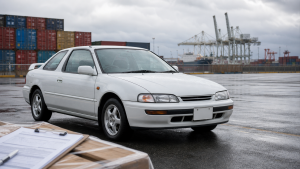
If you are bringing a 25-year-old JDM or European classic into the United States after July 24, the most important answer is also the easiest one to miss: the age-based federal import path did not disappear.
A vehicle that is at least 25 years old can still qualify for the DOT/NHTSA age exemption. CBP entry documents still matter. EPA still has its own declaration. State title and registration still happen after federal release. And tariff treatment still needs to be coded correctly at entry instead of assumed from a social media post or seller claim.
AWIS is watching this closely because July 24 created confusion for importers who heard that a temporary tariff layer ended and assumed the whole import process changed. It did not. The smarter takeaway is narrower: check the duty stack again, but do not skip the federal eligibility checklist.

Quick answer
After July 24, a properly documented 25-year-old classic import is still planned around the same core federal questions:
- Is the vehicle at least 25 years old based on its date of manufacture?
- Does the DOT HS-7 declaration match the vehicle facts?
- Does the EPA Form 3520-1 basis match the engine and emissions facts?
- Does the CBP entry package include bill of lading, bill of sale, foreign registration, and supporting documents?
- Has the customs broker reviewed duty, tariff, Chapter 99 coding, bond, and entry timing?
- Does the owner understand that state title, inspection, emissions, and registration rules are separate from federal import release?
The change after July 24 is mainly a tariff-review issue. It is not a reason to stop checking DOT, EPA, CBP, or state requirements.

What did not change: the 25-year DOT rule
NHTSA’s import FAQ still says a motor vehicle that is at least 25 years old can be lawfully imported into the United States without regard to whether it complies with all applicable Federal Motor Vehicle Safety Standards. NHTSA also says the 25-year period runs from the vehicle’s date of manufacture.
That last point matters for 2001-era vehicles in 2026. A car advertised as a 2001 model is not automatically eligible on January 1, 2026. The importer should confirm the actual month and year of manufacture, or have acceptable age documentation if the label is missing.
For many JDM and European classics, this is still the cleanest DOT path. But it is not a paperwork-free path. The importer still needs the right HS-7 basis, proof of age, ownership documents, and a clear entry file.
What did not change: EPA is separate
DOT age eligibility does not erase EPA review. EPA’s current import forms page continues to direct importers to use EPA Standard Form 3520-1 for passenger vehicles, highway motorcycles, and corresponding engines.
Classic importers should be especially careful with:
- Engine swaps
- Modified emissions equipment
- Missing engine labels
- Rebuilt or incomplete vehicles
- Race-use claims that do not match actual use
- Vehicles shipped without complete drivetrain information
A car can be old enough for the DOT 25-year rule and still need the right EPA declaration basis. Do not treat DOT and EPA as the same question.
What did not change: CBP entry documents still control release
CBP’s motor vehicle import guidance says importers need documents such as the carrier’s original bill of lading, bill of sale, foreign registration, and other documents covering the vehicle. CBP also states that EPA Form 3520-1 and DOT Form HS-7 are required to declare the emissions and safety provisions under which the vehicle is being imported.
That is why “the car is 25 years old” is not enough by itself. The entry package still has to support the claim.
Before the vehicle ships, confirm:
- Seller and buyer names match the commercial documents.
- VIN or chassis number is consistent across invoice, export certificate, and bill of lading.
- Manufacture date or acceptable age documentation is available.
- The vehicle is clean enough for agricultural inspection expectations.
- The broker has the power of attorney, bond plan, tariff coding, and entry instructions.
- The importer knows what cannot be packed inside the vehicle.
Port storage and exam delays are expensive. Most of the avoidable problems start before the car ever leaves the foreign port.
What changed after July 24: re-check the tariff stack
The July 24 question is about cost and coding, not whether a 25-year-old car can still use the age-based DOT path.
CBP’s Section 232 automobile FAQ says used passenger vehicles and trucks are subject to Section 232 duties except those manufactured in a year at least 25 years prior to the year of the date of entry. That exception is important for classic importers. But the broker still needs to review the full duty stack for the vehicle, its classification, origin, entry date, and any Chapter 99 instructions that apply at the time of entry.
If a temporary surcharge ended on July 24, that can change the estimate. It does not remove base duty. It does not remove CBP entry requirements. It does not remove EPA or DOT declarations. And it does not guarantee that every line item on the entry is unchanged.
This is why AWIS recommends a fresh broker review for vehicles entering after July 24, especially if the quote or purchase decision was made before that date.
What importers should not assume
Avoid these shortcuts:
- “It is a 2001, so it is automatically eligible.” Check manufacture date.
- “The tariff ended, so duty is zero.” Not necessarily. Base duty and other measures may still apply.
- “The seller exported cars before, so U.S. entry is fine.” Export permission is not U.S. import eligibility.
- “EPA follows DOT.” It does not. The EPA declaration is separate.
- “Federal release means I can register it anywhere.” State DMV rules are separate.
- “The car can be packed with parts and personal items.” CBP and carriers can create serious problems if the vehicle is used like a container.
JDM vs. European classics: same federal checklist, different documents
The core U.S. import questions are the same whether the car comes from Japan, Germany, the United Kingdom, Italy, France, or another market. The document set may look different.
For a JDM vehicle, importers often review export certificates, translation details, chassis numbers, deregistration paperwork, and auction/purchase records.
For a European classic, the file may involve registration certificates, invoices, export documents, heritage or manufacturer documentation, and port-specific handling details.
In both cases, the broker needs a clean path from the foreign ownership record to the U.S. entry. If the chassis number, manufacture date, or seller paperwork is unclear, fix that before booking the sailing.
State registration still comes after federal import
Federal import release is not the same as state title and registration. The state may ask for a foreign title or registration, customs entry documents, translations, odometer statements, VIN verification, inspection, emissions review, or additional forms.
This is especially important for right-hand-drive cars, kei vehicles, diesels, heavily modified vehicles, and cars with non-standard VIN formats. Some states are easier than others. Some require extra inspection. Some title offices are unfamiliar with foreign chassis numbers.
Plan the state side before the car lands, not after.
AWIS pre-shipment checklist
Before a 25-year-old JDM or European classic ships after July 24, confirm:
- Exact make, model, chassis/VIN, and date of manufacture
- Seller invoice, bill of sale, and payment records
- Foreign registration, export certificate, or deregistration record
- English translations where needed
- DOT HS-7 declaration basis
- EPA Form 3520-1 declaration basis
- CBP broker power of attorney and bond plan
- Duty and tariff estimate updated for the actual entry date
- Whether Section 232, reciprocal, or other Chapter 99 instructions apply or do not apply
- Steam cleaning or undercarriage cleaning expectations
- Port, carrier, arrival notice, and pickup plan
- State title and registration requirements after release
AWIS takeaway
After July 24, the right move is not panic. It is verification.
The 25-year DOT path remains available for qualifying vehicles. EPA and CBP still require clean declarations and documents. Section 232 treatment for older used vehicles still needs to be reviewed carefully by entry date and classification. State registration remains a separate step.
AWIS can help importers review the vehicle file before shipping, so the car enters on the correct basis instead of becoming an expensive lesson at the port.
Sources checked: NHTSA Importation and Certification FAQs; CBP Importing a Motor Vehicle; CBP Section 232 Additional FAQs – Automobiles and Auto Parts; EPA Publications and Forms for Importing Vehicles and Engines.