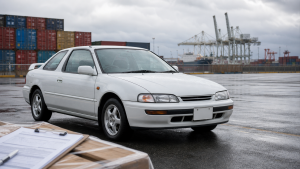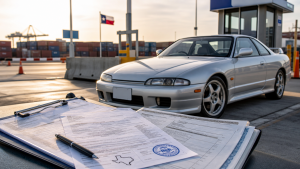
Importing a JDM vehicle in 2026 is still very doable, but the paperwork has to be built before the vessel arrives. The clean entries usually have the same pattern: the importer confirmed the 25-year date, collected the Japanese export certificate and translation, completed the EPA and DOT forms, signed the broker POA, handled the bond, and reviewed duty before the vehicle hit the U.S. port.
The problem files also have a pattern. The car is “basically 25 years old,” the export certificate is missing or untranslated, the invoice is vague, the EPA/DOT forms were treated like afterthoughts, and nobody knows whether the vehicle is a passenger car, truck, van, kei truck, motorcycle, or modified unit for customs purposes.
That is how a fun JDM purchase becomes a storage invoice with wheels.
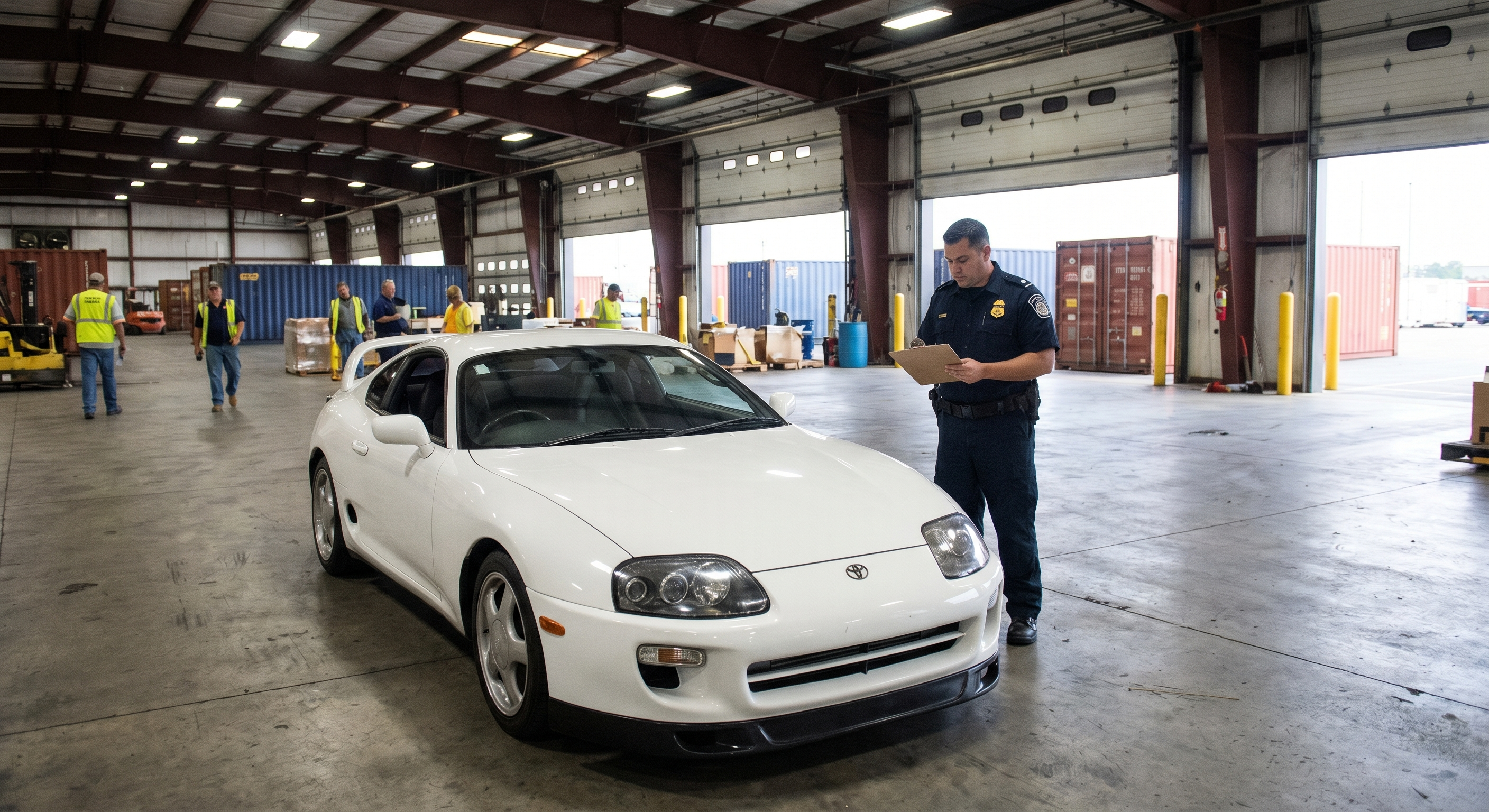
Quick answer for 2026 JDM importers
For most private JDM imports, the buyer should confirm four things before the car leaves Japan:
- The vehicle is old enough for the 25-year DOT/NHTSA path on the date of import.
- EPA Form 3520-1 and DOT Form HS-7 match the actual vehicle facts.
- The customs file has the bill of lading, export certificate, translation, invoice, importer details, POA, bond, and entry data.
- Duty was reviewed using the actual classification, value, origin, and any current Chapter 99 or tariff treatment.
Do not treat “25 years old” as “no paperwork” or “duty free.” The 25-year rule is mainly a federal admissibility path for safety compliance. Customs entry, duty, EPA, bond, POA, port release, and state title/registration still matter.
Start with the 25-year rule, but do not stop there
NHTSA says a motor vehicle that is at least 25 years old can be lawfully imported into the United States without regard to whether it complies with all applicable Federal Motor Vehicle Safety Standards. For that path, the vehicle is declared on DOT Form HS-7 under the correct box and the importer should keep evidence of age.
For JDM buyers, that means the manufacture date matters more than auction-site shorthand.
Before buying, confirm:
- Manufacture month and year
- Chassis number or VIN
- Make, model, trim, and body style
- Whether the unit is a passenger vehicle, truck, van, kei vehicle, motorcycle, or specialty vehicle
- Whether the export certificate supports the age claim
- Whether the vehicle will actually be 25 years old on the date of entry
A “2001 model” can still be a problem if the build date and entry date do not line up. Customs paperwork has no sense of humor about birthdays.
DOT HS-7: the safety declaration
DOT Form HS-7 tells CBP and NHTSA the safety basis for the import. For a qualifying 25-year vehicle, the importer normally uses the age-based path and should be ready to support it.
Have these ready:
- Completed DOT HS-7
- Export certificate or other age evidence
- English translation when the age evidence is in Japanese
- Chassis plate, build plate, or manufacturer plate photos when available
- Importer name and address matching the entry and POA
If a vehicle is less than 25 years old and was not originally built and labeled for U.S. FMVSS compliance, the path changes. It may require a Registered Importer, an eligibility determination, modifications, and a DOT conformance bond. That is not the normal classic JDM route, and it should be reviewed before anyone wires money overseas.
EPA Form 3520-1: the emissions declaration
CBP requires EPA Form 3520-1 for motor vehicles and engines covered by EPA import rules. The form tells EPA why the vehicle may be imported from an emissions standpoint.
For older JDM vehicles, do not assume the EPA answer is automatic. The file should account for:
- Vehicle age
- Engine type
- Whether the engine is original
- Whether emissions equipment was removed or modified
- Whether the vehicle is a passenger car, motorcycle, truck, or other unit
- Whether an Independent Commercial Importer route is needed instead
A 25-year DOT argument does not cure a bad EPA declaration. Engine swaps, unclear modifications, and missing support are where imports get sticky.
Customs documents AWIS wants before arrival
For CBP clearance, a broker needs enough to identify the vehicle, classify it, value it, confirm the importer, transmit the entry, and coordinate release.
A normal JDM entry file should include:
- Ocean bill of lading or arrival notice
- Japanese export certificate or deregistration certificate
- English translation of the export certificate
- Commercial invoice, bill of sale, or auction purchase record
- Importer full legal name, address, phone, and email
- Importer tax ID, EIN, SSN, or CBP importer number where required
- Vehicle make, model, year, chassis/VIN, and purchase price
- EPA Form 3520-1
- DOT Form HS-7
- Signed customs broker power of attorney
- Customs bond decision: single transaction bond or continuous bond
- Port, terminal, and pickup details
If the car is moving under a freight forwarder or consolidated shipment, the house bill and consignee details need to be clear. “Nissan Skyline, Japan, paid by wire” is not a customs file. It is a scavenger hunt.
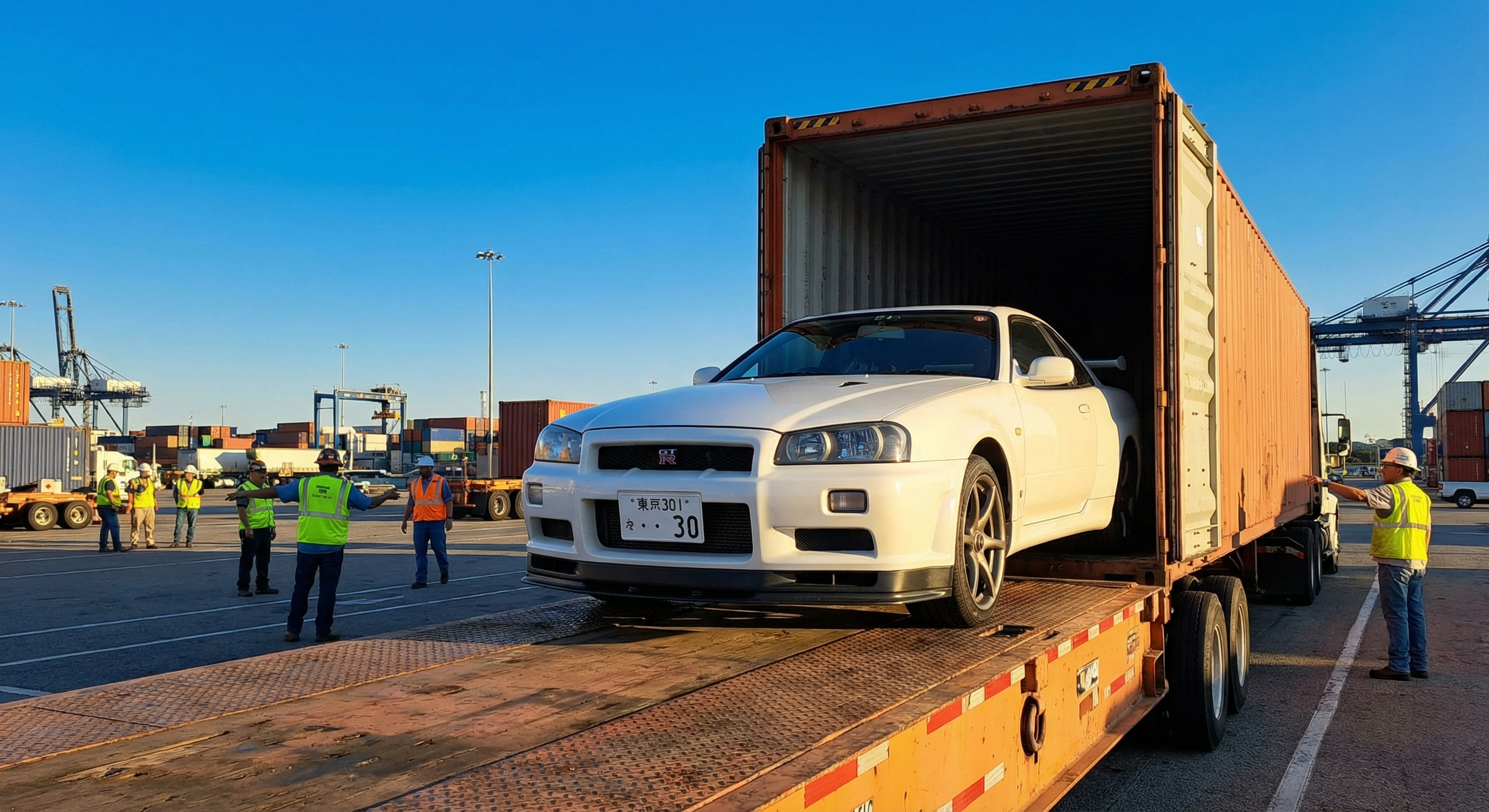
Duty: 25 years old does not mean duty free
The 25-year rule does not erase customs duty. Duty depends on classification, value, origin, and current tariff treatment.
For planning, many importers start with these general passenger-vehicle categories:
- Passenger cars are commonly planned around a 2.5% base duty rate.
- Trucks can be 25%, which is why vans, pickups, kei trucks, and cargo-style vehicles need careful classification review.
- Motorcycles may be free or dutiable depending on displacement and classification.
- Merchandise Processing Fee and Harbor Maintenance Fee may also apply.
- Broker fees, bond cost, terminal handling, exams, storage, and delivery are separate from duty.
For 2026, AWIS also reviews current tariff layers, Chapter 99 reporting, Section 232 context, country of origin, and any special treatment that could affect the total landed cost. CBP’s Section 232 automobile FAQ says used passenger vehicles and trucks are subject to Section 232 duties except those manufactured in a year at least 25 years before the year of entry, but that does not remove normal customs entry or base-duty review.
The practical advice is simple: do not quote duty from a Facebook comment. Have the broker review the actual unit.
Japan documents that cause the most delays
The Japanese export certificate is one of the most important JDM documents. It helps support identity, export status, and age.
AWIS normally checks:
- Chassis number against the bill of lading and invoice
- Make/model consistency
- First registration or manufacture details where shown
- Export status
- Translation quality
- Buyer/importer consistency
Small errors matter. One wrong chassis character can make the car look like a different vehicle. One missing translation field can slow release while free time at the terminal burns down.
Bond and POA are not optional cleanup items
A customs broker needs a valid POA before acting for the importer. The POA must match the importer of record, and the importer details must match the entry file.
Most formal entries also need a customs bond. A one-time private importer may use a single transaction bond. Dealers and repeat importers may be better served by a continuous bond.
Handle both before arrival. Waiting until the car is at the terminal is how a paperwork task turns into storage. The port is very efficient at billing for sitting still.
Federal release is not state registration
This is the caveat JDM buyers hate, but it is the one that saves pain later: CBP release does not guarantee your state will title, register, inspect, insure, or emissions-clear the vehicle.
Before buying, check the state path for:
- Title documents
- VIN or chassis inspection
- Odometer rules
- Safety inspection
- Emissions inspection
- Insurance underwriting
- Kei vehicle restrictions
- Antique, classic, collector, or limited-use plates
- Tax and registration forms
Federal import eligibility and state road use are separate questions. Solve both before the car ships.
AWIS 2026 JDM import checklist
Before the vessel departs, confirm you have:
- Manufacture date support showing the vehicle qualifies for the 25-year DOT/NHTSA path
- Japanese export certificate or deregistration document
- English translation
- Commercial invoice, bill of sale, or auction record
- Ocean bill of lading or booking details
- Completed DOT HS-7
- Completed EPA Form 3520-1
- Importer legal name, address, phone, email, and tax/importer ID where required
- Signed customs broker POA
- Bond plan: single transaction or continuous
- Duty, MPF, HMF, and fee estimate
- State title and registration plan after federal release
AWIS can review the customs file, confirm document gaps, help set up the bond, and file the CBP entry for JDM vehicles arriving at U.S. ports.
The best time to fix a JDM import file is before buying. The second-best time is before the car arrives. After that, the terminal starts charging tuition.