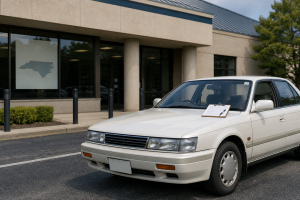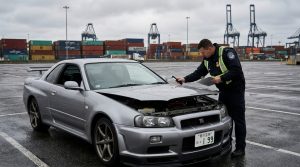
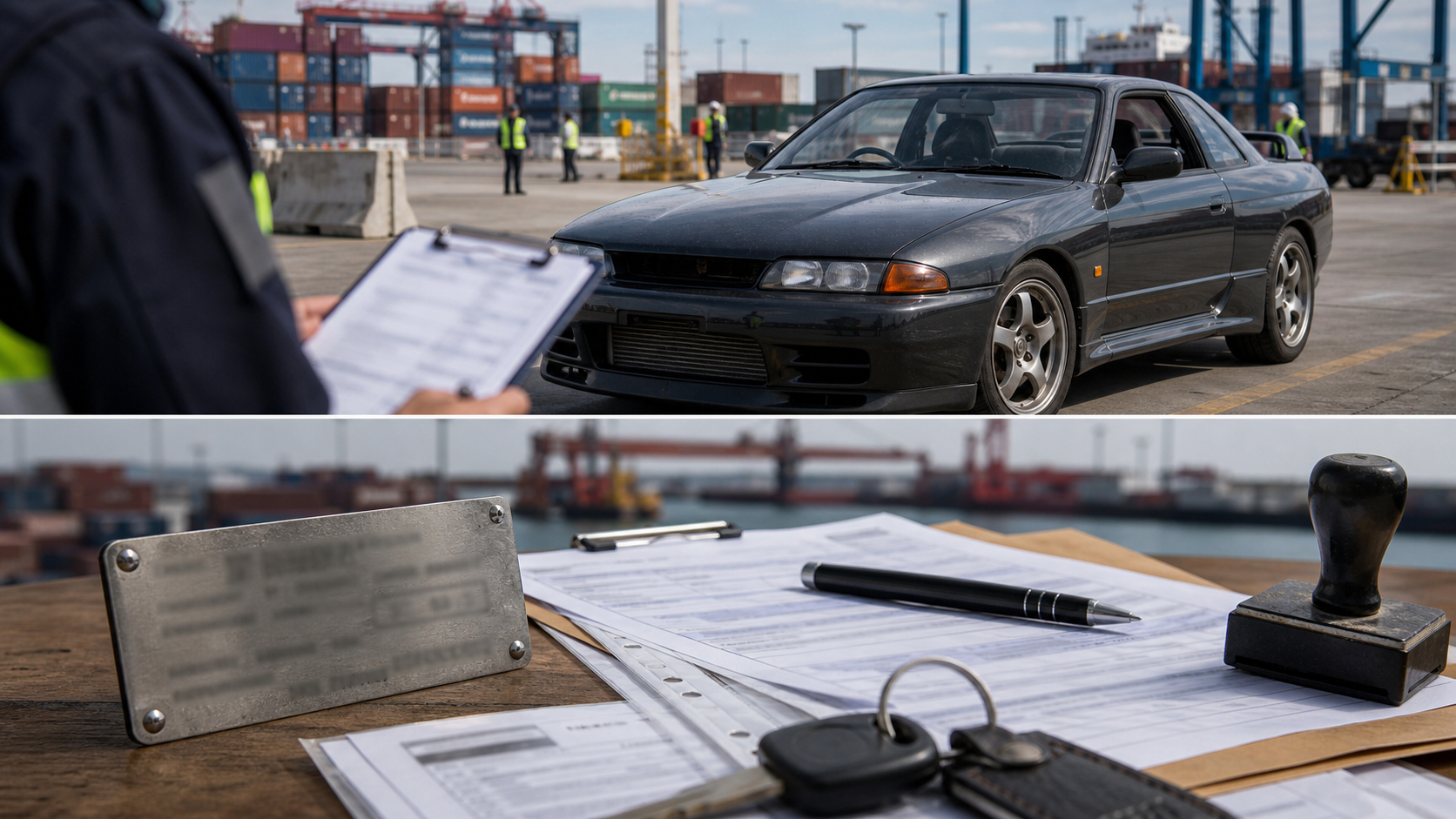
The 25-year rule makes JDM importing sound simple.
If the vehicle is at least 25 years old, it may be exempt from current Federal Motor Vehicle Safety Standards. That is the part most buyers hear. What gets missed is the paperwork, entry filing, duty, port handling, and state registration problems that can still slow the vehicle down.
A car can be old enough to import and still get delayed.
Here are the Customs steps that most often cause trouble.
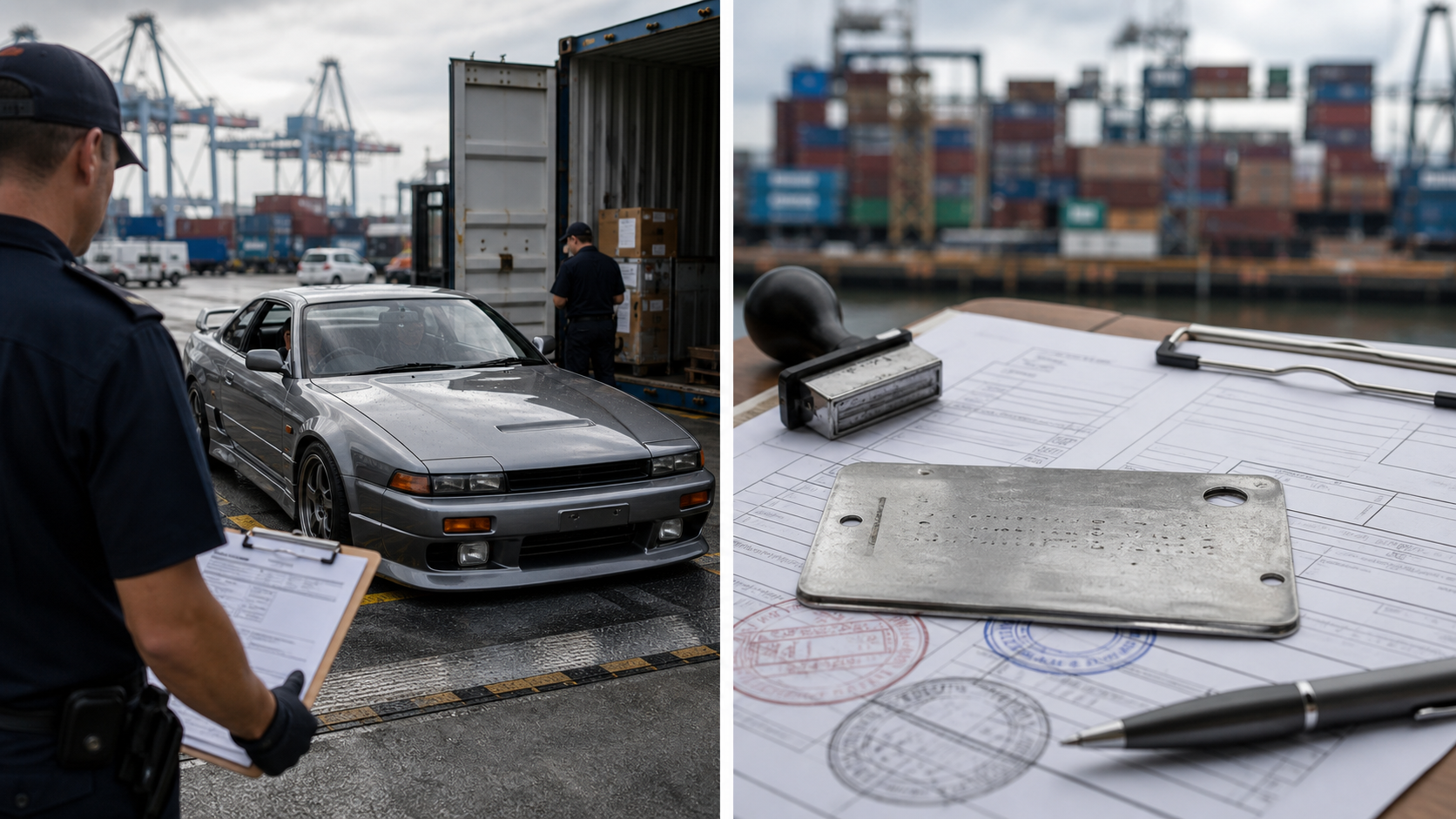
1. The manufacture date does not match the assumption
The 25-year rule is based on age, not just model year. That distinction matters.
A vehicle listed as a 2001 model may not be importable for the full year. If it was manufactured in September 2001, it generally needs to be 25 years old from that manufacture date, not simply from January 1 of the model year.
Before purchase, confirm the actual manufacture month and year.
If the exporter, auction sheet, chassis plate, and documents do not line up, expect questions.
2. DOT HS-7 is completed incorrectly
The DOT HS-7 form tells the government why the vehicle is eligible for import.
For a qualifying 25-year-old vehicle, the form is typically filed under the age-based exemption from FMVSS. If the wrong box is checked, or the vehicle information is inconsistent, the entry can be delayed while the broker corrects the filing.
Small form mistakes turn into port storage fast.
3. EPA Form 3520-1 is missing or wrong
The EPA still matters, even on older vehicles.
Passenger vehicles and highway engines are imported with EPA Form 3520-1. The importer needs to use the correct declaration code for the vehicle’s emissions pathway. If the vehicle is at least 21 years old and unmodified in certain ways, it may qualify under an age-based EPA exemption, but the facts need to support the declaration.
Do not guess on EPA codes. Guessing is a good way to create a Customs problem with a steering wheel attached.
4. The title or export certificate is incomplete
For JDM vehicles, the Japanese export certificate and translation are key documents. The buyer should also keep the bill of sale, invoice, auction paperwork, and shipping documents.
Delays happen when:
- Names do not match
- VIN/chassis numbers are inconsistent
- The translation is missing
- The invoice value looks unsupported
- The export certificate is incomplete
- The consignee is different from the buyer without explanation
Customs brokers can work through many document issues, but not if the paperwork arrives after the vessel does.
5. The ISF is filed late or with bad data
Importer Security Filing, commonly called ISF, must be filed before ocean cargo arrives in the United States.
For vehicle imports, bad data can create risk before the car ever reaches the port. Importer information, seller information, buyer details, HTS classification, container stuffing location, consolidator, and other data need to be correct.
Late or incorrect ISF can mean penalties or delays.
6. The HTS classification and duty are not planned
Most passenger vehicles are dutiable when imported. Trucks and certain specialty vehicles may be treated differently. The HTS classification affects duty, fees, and whether any trade remedy tariff issues need review.
The importer should know the expected duty before the vehicle ships.
If the vehicle is misclassified or the declared value is not supported, release may be slowed by entry review.
7. Port storage starts while people are still looking for documents
The port does not care that a PDF is sitting in someone’s inbox in Japan.
Once the vehicle arrives, storage clocks can start. If the broker is missing forms, translations, payment, arrival notices, or importer authorization, the vehicle can sit while charges grow.
Avoid this by sending the broker documents before arrival, not after the vessel docks.
8. Federal import eligibility does not guarantee state registration
This is the part many JDM buyers learn too late.
A vehicle may clear CBP and still be hard to register in the buyer’s state. California is the most common problem, but it is not the only state with extra friction.
Federal import release and state title/registration are separate steps.
Before buying, check the destination state rules. If the buyer plans to register in California, confirm emissions and direct-import requirements before shipping.
What to send your broker early
Before the vehicle arrives, send:
- Bill of sale or commercial invoice
- Japanese export certificate
- English translation
- Ocean bill of lading or arrival notice
- Vehicle photos, if available
- Chassis/VIN details
- Buyer/importer ID information
- Power of attorney
- Any lien or ownership documents
- Destination state, if known
A good broker will tell you what is missing before the vehicle hits the port.
Bottom line
The 25-year rule opens the door. It does not carry the car through Customs by itself.
Most delays come from preventable paperwork issues: wrong dates, missing translations, bad EPA/DOT forms, late ISF, unclear value, or poor timing.
AWIS helps importers prepare Customs entries for JDM and other vehicle imports. If you are buying a 25-year-old vehicle, get the paperwork reviewed before the vessel arrives. That is much cheaper than learning from port storage.
This article is general information, not legal advice. Import rules, tariffs, and registration requirements can change. Confirm your specific facts before shipping.