A classic car can look like a great overseas buy until the entry file gets reviewed at the U.S. port.
Before wiring money, importers should talk to a licensed customs broker who understands vehicles, not just general cargo. CBP’s vehicle import guidance is blunt: vehicles manufactured abroad often do not meet U.S. safety, bumper, and emissions standards unless they were built for U.S. sale, and importers should contact EPA and DOT before buying a vehicle abroad.
A customs broker cannot make an ineligible car eligible. But a good broker can help you identify problems before the car is already on the water.
1. Is the vehicle actually eligible for the entry path I am relying on?
Start here. Do not begin with the seller’s claim.
Ask the broker:
- What import basis are we using for DOT/NHTSA?
- Is the car at least 25 years old by month and year of manufacture, not just model year?
- If it is under 25 years old, is there a valid Registered Importer path and NHTSA eligibility decision?
- What EPA declaration code applies?
- Does the car need an Independent Commercial Importer or other EPA-specific handling?
NHTSA’s current importation FAQ explains that a vehicle under 25 years old and not originally manufactured to comply with all applicable FMVSS generally cannot be permanently imported unless NHTSA has determined it eligible and it is imported through a Registered Importer process. EPA separately maintains import declaration forms and procedures for vehicles and engines.

2. What documents do you need before the car ships?
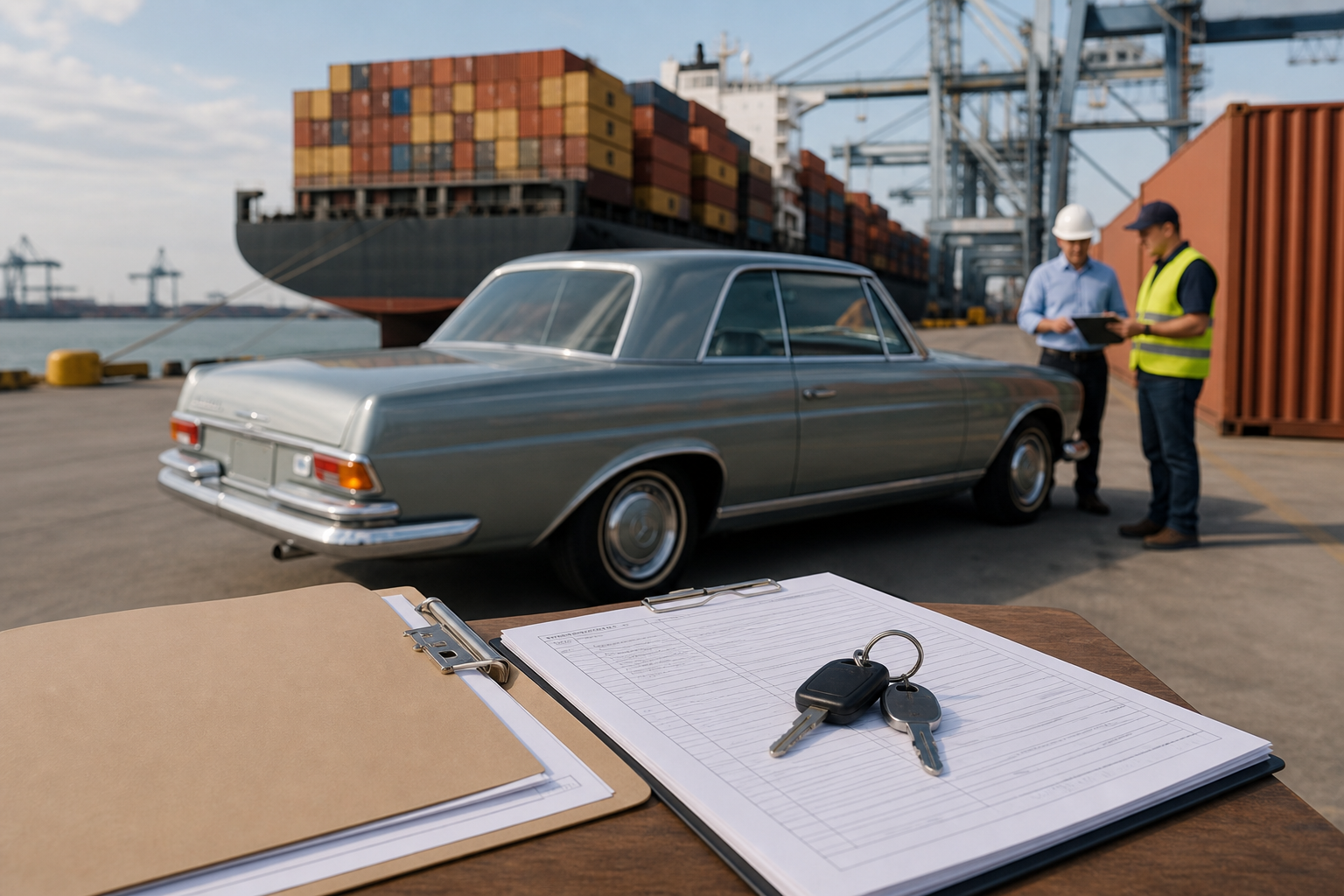
CBP says vehicle clearance requires documents such as the carrier’s original bill of lading, bill of sale, foreign registration, and other documents covering the vehicle. CBP also requires EPA Form 3520-1 and DOT Form HS-7 declarations for emissions and safety.
Ask the broker for a document list before the purchase is final:
- Foreign title or registration.
- Bill of sale or commercial invoice.
- Export certificate or deregistration document when applicable.
- Manufacture month/year evidence.
- Bill of lading instructions.
- Seller identity and consignee details.
- EPA Form 3520-1 and DOT HS-7 filing plan.
- Power of attorney and importer-of-record information.
If the seller cannot produce the core ownership and export documents, do not assume the broker can fix it at arrival.
3. Who is the importer of record, and what are my responsibilities?
CBP’s general import guidance reminds buyers that when goods are imported into the United States, the buyer/importer is responsible for compliance with applicable rules and may owe duty and other charges. For vehicles, that responsibility is higher because CBP, EPA, DOT/NHTSA, agriculture, and state title offices may all matter.
Ask:
- Who will be listed as importer of record?
- What power of attorney do you require?
- What information must match across the invoice, title, bill of lading, and entry?
- What happens if CBP, EPA, or DOT questions the entry basis?
- What costs are still my responsibility after entry is filed?
A broker files the entry. The importer still owns the facts.
4. What duties, tariffs, and fees should I budget for?
Do not ask only for “the duty.” Ask for the full landed-cost view.
The broker should help you estimate:
- Normal duty by vehicle type and classification.
- Harbor Maintenance Fee and Merchandise Processing Fee when applicable.
- Any current additional tariffs or special trade measures that may apply based on origin, classification, or effective date.
- Bond cost.
- Broker fee.
- Port, terminal, exam, storage, demurrage, or delivery costs.
Tariff treatment can change, and classic-car eligibility does not erase customs value, origin, classification, or fee questions.
5. What could delay release at port?
A classic car import can be delayed by missing documents, unmatched VIN/chassis details, cleaning/agriculture issues, exam holds, incorrect consignee information, payment delays, or an unclear EPA/DOT declaration.
Ask:
- Which port will handle entry?
- What is your normal timeline after vessel arrival?
- How do you notify me about duties, exams, or missing documents?
- What storage or demurrage clock starts if the file is incomplete?
- Who coordinates with the carrier, terminal, freight forwarder, or inland transporter?
The best broker conversation happens before booking ocean freight, not after the arrival notice lands.
6. Can you coordinate the handoff after customs release?
A customs release is not the same as the car being in your driveway.
Ask:
- Do you arrange delivery from port, or do I need a separate transporter?
- When can the transporter pick up after release?
- Are there terminal appointment, TWIC escort, forklift, battery, or non-runner issues?
- What documents will I need for state title and registration after release?
- Will you provide the entry summary and stamped/released documents promptly?
AWIS focuses on the customs side, but the importer still needs a clean logistics handoff and a state title plan.
Broker red flags before you buy
Be careful if a broker or seller says:
- “Anything over 25 years old is automatic.”
- “EPA and DOT do not matter for classics.”
- “We can figure out the documents after it arrives.”
- “The seller’s listing is enough proof.”
- “The duty number is final without knowing origin, value, classification, and entry date.”
The better answer is usually less exciting: verify the vehicle facts, confirm the forms, calculate the landed cost, and make the buying decision with the whole file in view.
Bottom line
Before buying a classic car overseas, ask the customs broker to review eligibility, documents, importer-of-record details, duty exposure, release timing, and post-release handoff.
If the file is clean, you can buy and ship with more confidence. If the file is messy, it is better to find out before the car leaves the foreign port.