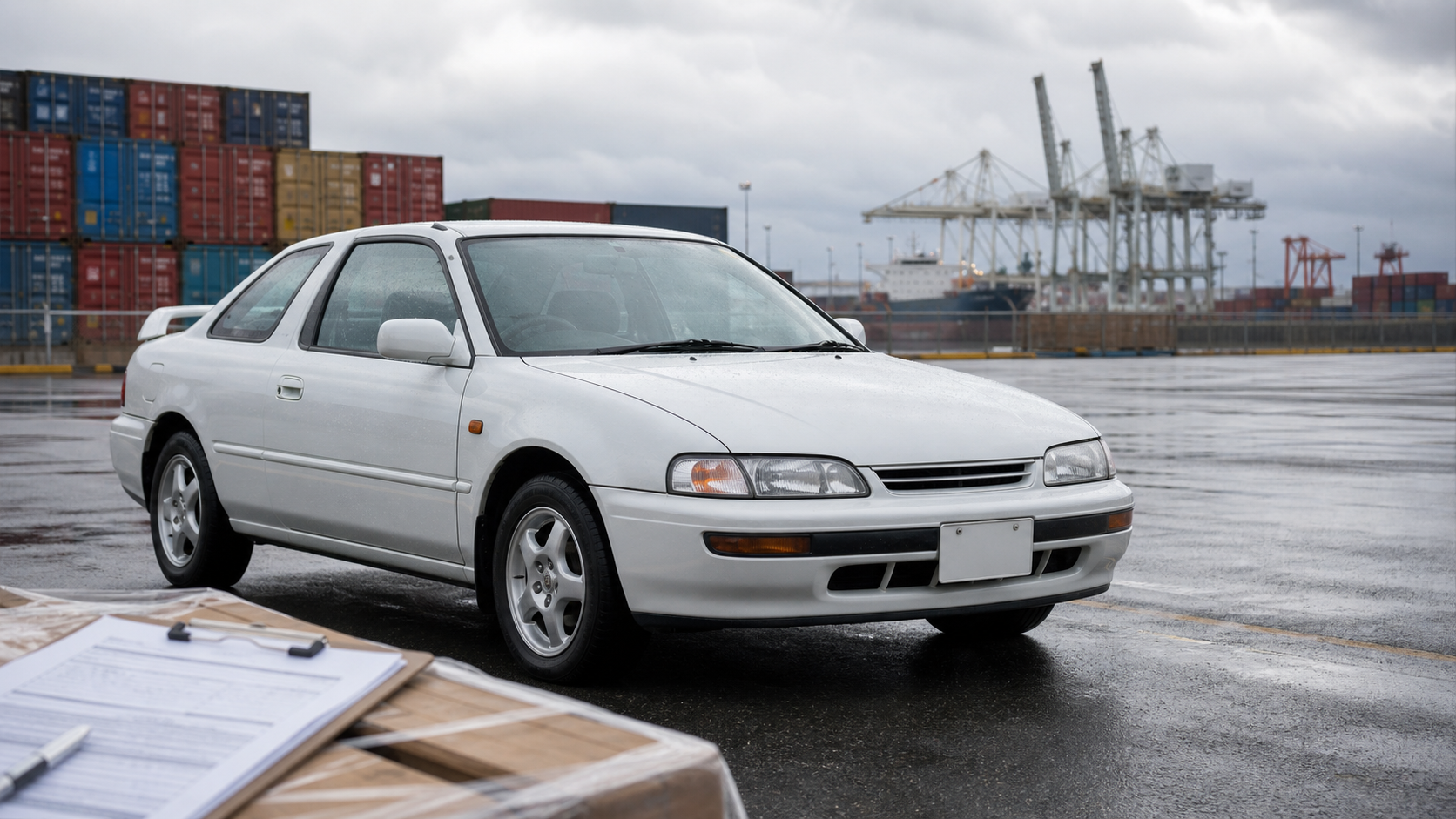
Welcome to the next article in AWIS’ JDM state registration series.
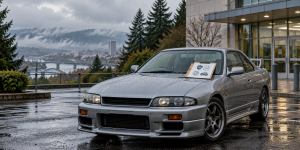
Washington is a natural landing spot for Japanese-market imports. The state has port access, a strong Seattle-Tacoma enthusiast market, military buyers around Joint Base Lewis-McChord, and plenty of demand for Skylines, Land Cruisers, kei trucks, Delicas, and other right-hand-drive vehicles.
Washington is usually workable for federally legal 25-year-old imports, but it is not a “Customs cleared, grab plates tomorrow” state.
The key issue is the handoff from federal import clearance to Washington Department of Licensing title work. A vehicle can be old enough under the federal 25-year rule and still hit delays if the Customs documents, foreign ownership documents, VIN or chassis number, title application, emissions paperwork, use tax items, and plate choice are not lined up.
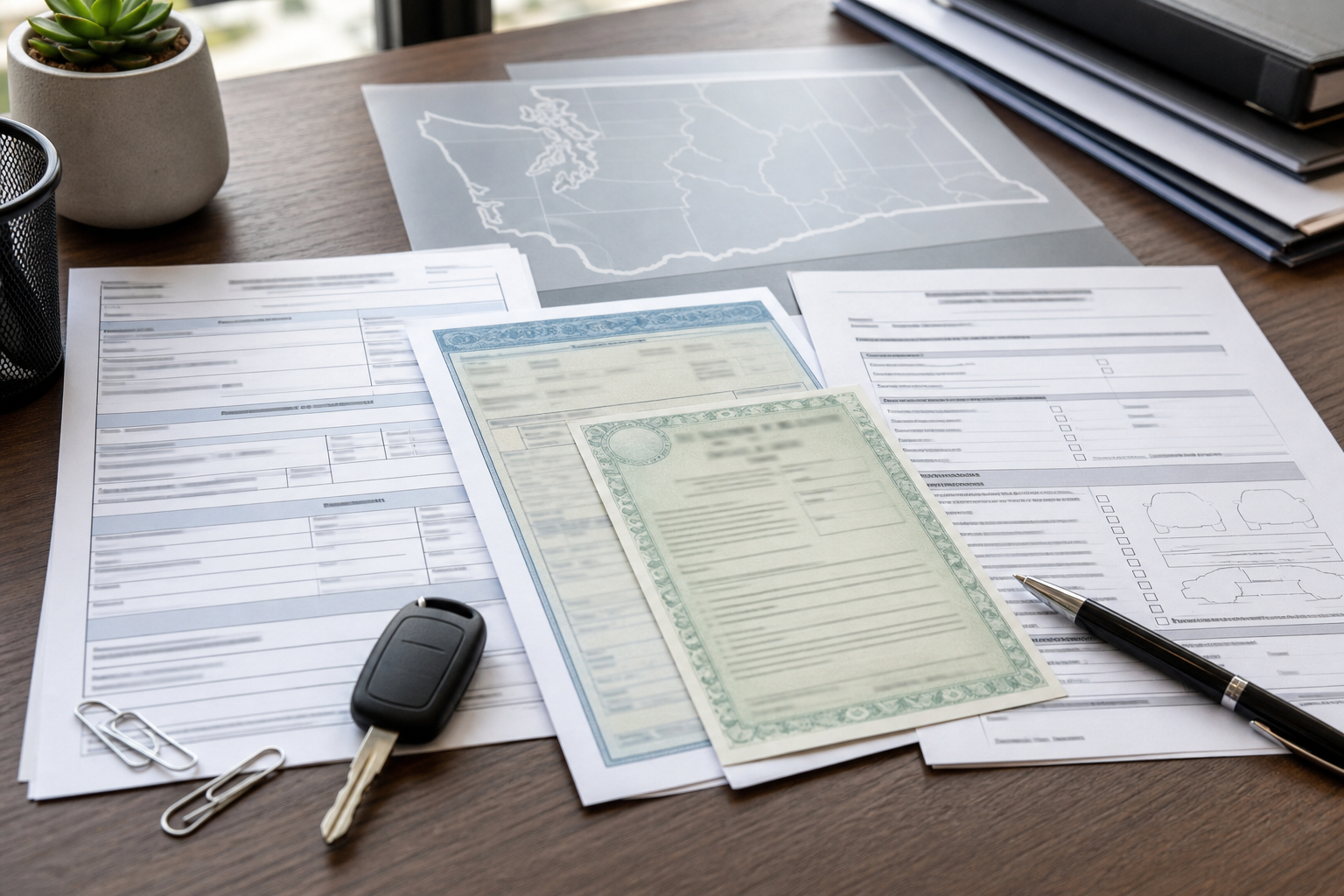
Federal import approval is not Washington title approval
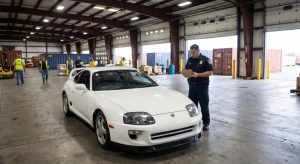
The federal 25-year rule helps a vehicle enter the United States when it is old enough to qualify for the NHTSA exemption from current Federal Motor Vehicle Safety Standards.
That is the import gate.
Washington title and registration is a separate state process.
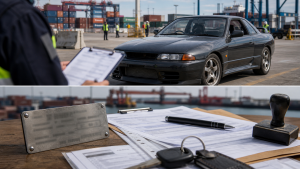
CBP says importers need the carrier’s bill of lading, bill of sale, foreign registration or ownership documents, EPA Form 3520-1, and DOT Form HS-7 for Customs clearance. Washington DOL separately says imported vehicles must have U.S. Customs or Department of Defense documents that include the year, make, and VIN, and that those documents must be from U.S. Customs, not a brokerage or foreign customs office.
That distinction matters. The broker can help prepare and coordinate the entry, but Washington wants the Customs evidence in the title packet. If the entry record does not clearly match the vehicle, the state counter may not be able to move the file forward.
Washington wants the import documents to match the car
JDM vehicles often do not have a U.S.-style 17-digit VIN. They may have a shorter Japanese chassis number instead. That is common, but it needs to be handled carefully.
Washington DOL’s Customs inspection guidance says the Customs or Department of Defense documents must include the year, make, and VIN. For a Japanese-market vehicle, the practical goal is consistency: the chassis number on the Japanese export certificate, translation, bill of sale, bill of lading, CBP entry, EPA form, DOT form, and title application should match.
Small formatting differences can create real delay. If one document says BNR32-123456, another says BNR32123456, and the title application drops a character, that is the kind of tiny paperwork barnacle that keeps a clean car tied to the dock.
Before the vehicle arrives, decide how the chassis number will be shown and keep it consistent across the packet.
Documents Washington buyers should gather early
For a 25-year-old JDM import headed to Washington, build the Customs packet and the Washington title packet at the same time.
You may need:
- Japanese export certificate or other foreign ownership document
- Certified English translation for any ownership document not printed in English
- Bill of sale or purchase invoice
- CBP Form 7501 Entry Summary or other Customs release/entry evidence
- DOT Form HS-7 showing the federal safety basis for import
- EPA Form 3520-1 showing the emissions basis for import
- Bill of lading or arrival notice
- Any bond release document if the vehicle was entered under bond
- Washington Vehicle Title Application
- Odometer disclosure if required, or support for an odometer exemption
- Proof of Washington address and owner identification for the licensing office
- Weight documentation if the scale weight is not shown on the ownership record
- Use tax and fee payment items
- Any VIN inspection or additional review requested by DOL, a licensing office, or Washington State Patrol
Washington DOL’s title application instructions also ask for vehicle details such as VIN, model year, fuel type, use class, make, body type, scale weight, mileage, owner information, and notarized or in-office signatures.
For imports, do not wait until the counter visit to find out whether the title office wants the original foreign ownership document, a translation, or more proof of Customs release. Call the vehicle licensing office before the appointment.
Customs documents must be official enough for Washington
Washington DOL’s Customs inspection page is short, but it says something important: the Customs or Department of Defense documents must be from U.S. Customs, not from a brokerage or foreign customs office, and must be signed and stamped by Customs.
That can become a problem when an importer only saves a broker worksheet, foreign export paperwork, arrival notice, or informal email release.
A broker worksheet is useful. It is not the same thing as the official federal entry evidence Washington may want for title work.
If the vehicle was entered electronically, ask early what Washington’s licensing office will accept in that case. Do not assume every counter handles imported-vehicle proof the same way. Imported cars have a way of turning normal DMV errands into a paperwork scavenger hunt with fluorescent lighting.
VIN and chassis number inspection issues
Washington does not present one simple “all imported JDM cars must get this one inspection” rule in the same way some states do. But VIN and ownership review can still come up, especially when the vehicle has a non-standard chassis number, missing ownership evidence, prior salvage history, or unclear records.
Washington State Patrol performs physical inspections in certain cases, including rebuilt or destroyed vehicles, homemade vehicles, vehicles reported stolen, vehicles without a proper VIN, and other special cases.
That means a clean import packet is the first line of defense. If DOL or the licensing office cannot tie the documents to the vehicle, the owner may be sent for additional inspection or review.
Before purchase, confirm where the chassis number is stamped on the vehicle. Take clear photos. Make sure the number is readable. If the car has a plate, sticker, or firewall stamp that differs from the export certificate, solve that before the vehicle is on a transporter headed to Washington.
Washington emissions rules are different from many states
Washington’s old emissions testing program ended on January 1, 2020. The Washington Department of Ecology says owners are no longer required to have emissions tested before renewing registration.
That does not mean emissions issues are irrelevant.
Washington’s Clean Car Law requires certain vehicles to be certified to California emissions standards. DOL says the Clean Car Law applies statewide to 2009 and newer vehicles, with used vehicles affected if they are 2009 or newer, have less than 7,500 miles, the new owner is a Washington resident, and no exemption applies. DOL also lists 2008 or earlier model vehicles as exempt from that Clean Car Law requirement.
For most 25-year-old JDM imports in 2026, the vehicle will be well older than 2009, so the Clean Car Law should usually not be the main obstacle. Still, do not treat that as a blanket legal shortcut. Fuel type, model year, vehicle classification, missing labels, modified emissions equipment, or local interpretation can still create questions.
Ecology also notes that driving a vehicle with modified emissions equipment or a smoking vehicle remains illegal in Washington.
Collector plates can help some owners, but they are not for daily use
Washington offers Collector Vehicle plates for vehicles and trailers 30 years or older. That age threshold matters because the federal import rule is 25 years, but Washington collector plates are listed at 30 years or older.
A 1999 vehicle imported in 2026 may be federally eligible under the 25-year rule, but it may not yet qualify for Washington Collector Vehicle plates.
For vehicles that do qualify, the plate path has limits. DOL says Collector Vehicle plates are for vehicles owned and operated as collector vehicles, in good running order, with insurance, and with proof of ownership and current registration for a second vehicle used for daily driving, commuting, or business. DOL also says these plates may not be used for regular transportation in the manner of a fully licensed vehicle, for commercial purposes, or to carry a load.
So yes, collector plates may fit a weekend Skyline or show car. No, they are not a magic daily-driver workaround.
Use tax, value, and fees can surprise import buyers
Washington use tax is another common delay point.
DOL says use tax is calculated from the vehicle or vessel’s fair market value and includes the 0.3% motor vehicle sales and use tax plus the sales tax rate at the buyer’s address. DOL also says the actual selling price may or may not match fair market value, and it lists ways to support a lower value when the vehicle is worth less than the state’s average value.
For JDM imports, this can get messy because the vehicle may not fit normal U.S. valuation tools. Bring a clean bill of sale, purchase invoice, foreign auction sheet if available, repair estimates if relevant, and any documentation that supports the value.
If the licensing office cannot understand the value, ownership chain, or import path, the transaction can stall even when the Customs entry itself was handled correctly.
Common Washington JDM mistakes
The most common Washington mistakes are practical, not dramatic:
- Clearing Customs but not keeping official Customs entry/release evidence
- Relying on broker paperwork when DOL wants U.S. Customs documents
- Missing DOT HS-7 or EPA 3520-1 from the import file
- Bringing foreign ownership documents without a clean English translation
- Using inconsistent VIN or chassis number formatting across documents
- Not checking whether the licensing office wants originals, copies, or additional review
- Assuming Washington’s ended emissions testing program means no emissions-related questions can ever come up
- Assuming a 25-year-old import automatically qualifies for Collector Vehicle plates, even though Washington lists those plates for vehicles 30 years or older
- Forgetting that collector plates have use restrictions and require another daily-use vehicle
- Showing up without weight, mileage, value, or use-tax support
Washington is usually manageable, but it rewards a tidy packet. It is not a state where you want the first serious document review to happen while the car is already sitting in storage accruing daily fees.
Should Washington buyers import JDM vehicles?
Often, yes.
Washington can be a practical state for federally legal 25-year-old JDM imports if the buyer plans the paperwork before the vessel arrives.
A Washington import may make sense if:
- The vehicle is federally eligible under the 25-year rule
- The Customs entry packet is complete
- The Japanese ownership documents and translations are ready
- The chassis number is consistent across all documents
- The buyer confirms title requirements with a Washington vehicle licensing office
- Use tax and value support are prepared before the appointment
- The buyer understands whether standard plates or Collector Vehicle plates fit the actual use
It may not make sense if the seller cannot prove ownership, the vehicle has mismatched chassis records, the import file is missing federal documents, or the buyer is counting on collector plates for normal transportation.
Bottom line
Washington is generally a workable state for 25-year-old JDM imports, but the Customs-to-DOL handoff has to be clean.
For JDM buyers, the question is not only whether the vehicle can enter the United States. The question is whether the Washington title packet proves the same vehicle, the same owner, the same value, and the same federal import basis without making the licensing office guess.
AWIS can help with the Customs side of a JDM import, including entry planning, CBP paperwork coordination, duty, EPA/DOT documentation, and release planning. For Washington title and registration, confirm requirements with Washington DOL, the correct vehicle licensing office, Washington Ecology where emissions questions apply, and Washington State Patrol if an inspection is required.
This article is general information, not legal advice. Washington requirements can change, licensing office practices may vary, and emissions, inspection, tax, and plate rules can depend on model year, vehicle classification, owner status, and intended use. Confirm requirements directly before purchase.
Sources reviewed
- Washington State Department of Licensing, Customs inspections
- Washington State Department of Licensing, Vehicle title application instructions
- Washington State Department of Licensing, Buy and register a vehicle
- Washington State Department of Licensing, Clean Car Law emission requirements
- Washington State Department of Licensing, Collector Vehicle specialty design plate
- Washington State Department of Licensing, Use tax
- Washington Department of Ecology, Emission check program ended
- Washington State Patrol, VIN inspection guidance
- U.S. Customs and Border Protection, Importing a Motor Vehicle
- NHTSA, Importation and Certification FAQs