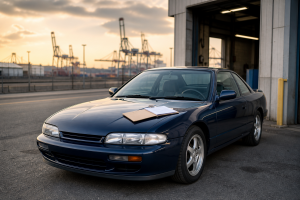
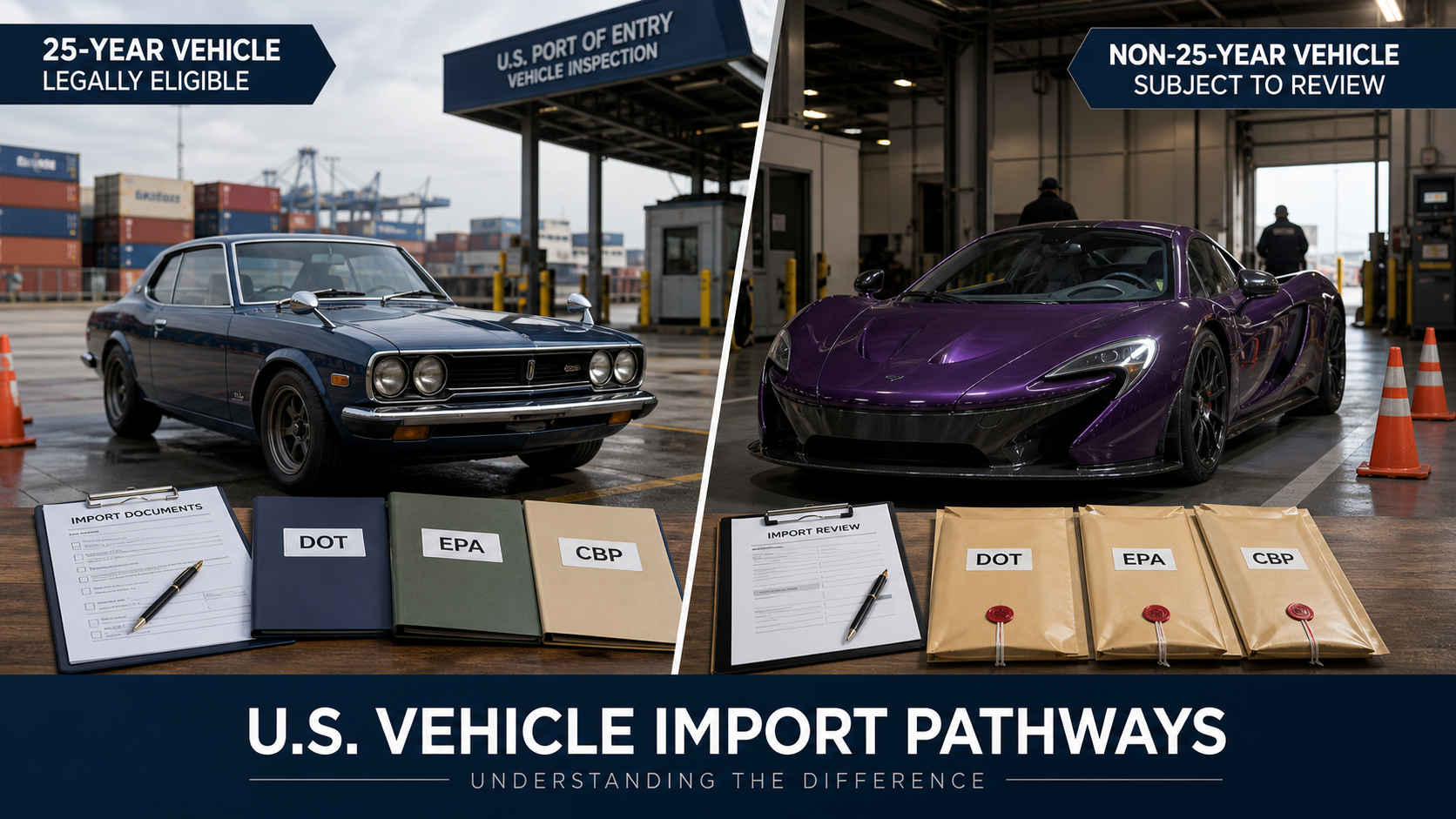
Some imported vehicles are simple on the DOT side. Others are not. The mistake is assuming every rare car has a shortcut into the United States.
For vehicle importers, two phrases come up often: the 25-year rule and Show or Display. They are not the same path. One is an age-based DOT exemption. The other is a limited-use NHTSA permission process for certain historically or technologically significant vehicles.
AWIS helps importers sort this out before the vehicle is loaded overseas, because the worst time to discover an eligibility problem is after the car is already on the water. Customs does not care that the seller said it would be fine. Neither do DOT or EPA.
Quick answer: which path usually fits?
If the vehicle is at least 25 years old from its date of manufacture, the DOT side is usually the cleaner path. NHTSA says a motor vehicle at least 25 years old may be lawfully imported without regard to whether it complies with all applicable Federal Motor Vehicle Safety Standards, and it is declared on the DOT HS-7 form under the 25-year basis.
If the vehicle is newer than 25 years old, not U.S.-certified, and not eligible through a Registered Importer path, Show or Display may be worth reviewing only if the car is genuinely rare and significant. It is not a workaround for ordinary gray-market imports.
That distinction matters. The 25-year path is about age. Show or Display is about NHTSA permission, eligibility, and limited use.
What the 25-year rule does
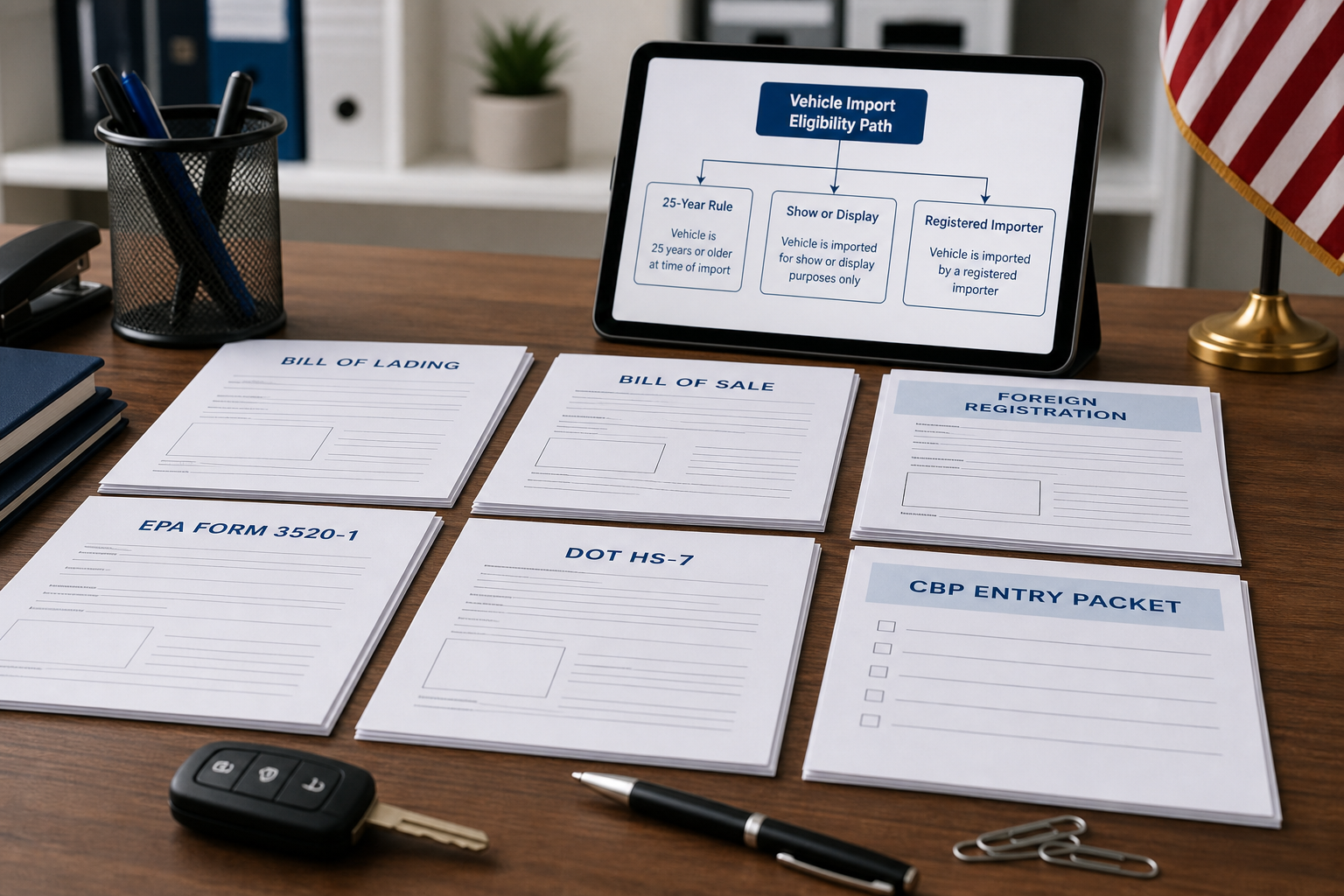
The 25-year rule is a DOT/NHTSA safety-standard exemption. NHTSA’s import FAQ states that a motor vehicle at least 25 years old can be imported without regard to whether it complies with applicable FMVSS. The 25-year period runs from the vehicle’s date of manufacture, not just the model year printed in a listing.
For import planning, that means the importer should confirm:
- Date of manufacture or acceptable age documentation
- VIN/chassis number and foreign registration details
- Bill of sale and purchase records
- Whether the vehicle is complete, modified, reconstructed, or missing drivetrain components
- DOT HS-7 declaration basis
- EPA declaration basis on Form 3520-1
- CBP entry documents, duty, bond, and port handling
A common mistake is treating “1999 model year” as automatically eligible on January 1. That is not safe. The date of manufacture controls the DOT 25-year analysis.
What Show or Display does
Show or Display is a narrow NHTSA import path for certain nonconforming vehicles that are imported for show or display use. The vehicle must qualify under NHTSA’s criteria, and the importer needs written permission where required. NHTSA and the regulations also tie Show or Display vehicles to strict use limits, including the well-known limit of no more than 2,500 miles in any 12-month period.
This is not automatic approval. The agency looks at the vehicle and the basis for eligibility. A rare car may still be denied. A valuable car may still be denied. “I want one” is not an import basis.
Show or Display usually fits only when the vehicle has special historical or technological significance and the importer is prepared to live with usage restrictions. If the plan is to daily-drive it, commute in it, or put normal annual mileage on it, this is probably the wrong path.
EPA still matters
The DOT answer is not the whole import answer. EPA has its own rules for emissions, engines, exemptions, and declarations. EPA’s current import forms page directs importers to use EPA Standard Form 3520-1 for passenger vehicles, highway motorcycles, and their corresponding engines.
For older vehicles, importers often hear about EPA’s 21-year emissions-related exemption. That is separate from the 25-year DOT rule. It also depends on the vehicle and engine facts, including whether the engine is original configuration or has been changed. Engine swaps, aftermarket modifications, and missing documentation can create problems.
Bottom line: a car can look clean under DOT and still need a careful EPA review.
CBP entry basics do not go away
CBP clearance still requires an entry package. CBP’s motor vehicle import guidance says importers need documents such as the carrier’s original bill of lading, bill of sale, foreign registration, and other documents covering the vehicle. CBP also notes that importers must complete EPA Form 3520-1 and DOT Form HS-7 declaring the emissions and safety basis for import.
Most vehicle entries also involve duty, fees, bond considerations, and coordination with the port, carrier, and customs broker. Foreign-made autos are generally dutiable, and the specific treatment depends on the vehicle, value, classification, origin, and any applicable trade measures.
This is where importers get burned: they focus on whether the car is “legal” but forget the entry details that release the cargo.
Side-by-side comparison
25-year rule
Best fit:
- Vehicles at least 25 years old from date of manufacture
- JDM classics, European classics, older collector vehicles
- Importers who want normal ownership after federal entry, subject to state title and registration rules
Watch-outs:
- Model year is not enough by itself
- EPA must be checked separately
- State DMV, inspection, emissions, title, and insurance rules still apply
- Modified or reconstructed vehicles need closer review
Show or Display
Best fit:
- Certain newer-than-25-year collector vehicles with strong historical or technological significance
- Rare vehicles where NHTSA eligibility has been reviewed or can be supported
- Owners who understand the limited-use nature of the import path
Watch-outs:
- Approval is not automatic
- NHTSA review and written permission may apply
- The vehicle cannot be driven more than 2,500 miles in a 12-month period
- EPA requirements still apply
- It is not a shortcut for normal street use
Common importer mistakes
The expensive problems are usually avoidable:
- Buying before checking eligibility. The seller’s export experience does not prove U.S. import eligibility.
- Confusing model year with manufacture date. DOT’s 25-year timing is based on manufacture date.
- Assuming Show or Display is a loophole. It is limited, reviewed, and usage-restricted.
- Ignoring EPA. DOT eligibility does not erase emissions requirements.
- Shipping without clean documents. Missing bill of sale, foreign registration, chassis/VIN data, or power of attorney can slow entry.
- Forgetting state rules. Federal import release is not the same as state title, registration, inspection, or emissions approval.
- Overlooking modifications. Engine swaps, missing labels, reconstructed vehicles, and non-original configurations can change the analysis.
What to check before the car ships
Before booking ocean freight, confirm these items:
- Exact make, model, chassis/VIN, and manufacture date
- Current location and export documents
- Purchase invoice or bill of sale
- Foreign title or registration
- Whether the car is complete, modified, or rebuilt
- DOT path: 25-year, conforming label, RI path, Show or Display, or another basis
- EPA path and Form 3520-1 basis
- CBP entry requirements, bond, duty estimate, and port details
- State title/registration expectations after release
If the vehicle is not clearly eligible, pause before shipping. A storage bill at port is a rude way to learn federal import law.
AWIS takeaway
For most older collector imports, the 25-year rule is the path importers hope to use. For a narrow set of newer rare vehicles, Show or Display may be possible, but it requires eligibility review, agency permission where applicable, and strict mileage limits.
The smart move is simple: verify DOT, EPA, and CBP requirements before the car leaves the foreign port. AWIS can help review the paperwork and entry path before the vehicle ships, so the importer knows which route actually fits the car.
Sources checked: NHTSA Importation and Certification FAQs; 49 CFR Part 591; CBP Importing a Motor Vehicle guidance; EPA Publications and Forms for Importing Vehicles and Engines.