Welcome to the next article in AWIS’ JDM state registration series.
Texas is a high-interest state for 25-year-old Japanese imports. It has major ports, a large car community, military moves, and plenty of buyers who want a Skyline, Land Cruiser, kei truck, Delica, or other right-hand-drive import on Texas roads.
Texas is usually more workable than California, but it is not a paperwork-free state.
A JDM vehicle can clear U.S. Customs and still stall before Texas title if the Customs entry, DOT exemption paperwork, ownership documents, VIN inspection, insurance, and county tax office packet are not lined up. The car may be federally legal to import and still not be ready for Texas plates.
Federal import approval is not Texas title approval
The federal 25-year rule helps a vehicle enter the United States when it is old enough to qualify for the NHTSA exemption from current Federal Motor Vehicle Safety Standards.
That is the import gate.
Texas title and registration is a separate state process.
TxDMV says an imported vehicle must meet federal and state importation requirements before Texas titling or registration. For a 25-year-old JDM import, that usually means the Customs entry and federal import documents need to clearly show the vehicle was properly entered and is exempt or compliant under the federal safety rules.
In plain English: CBP release gets the vehicle into the country. Texas still wants a clean title packet before it puts the vehicle into its system.
Texas is paperwork-driven, not guesswork-driven
Texas gives imported vehicles a specific path. The state points owners through import compliance, any applicable inspection requirement, a law-enforcement VIN inspection, and then the county tax office.
That middle step matters.
For many JDM vehicles, the VIN or chassis number does not look like a U.S. 17-digit VIN. That is normal for Japanese-market vehicles, but normal does not mean effortless. If the chassis number on the Japanese export certificate, bill of sale, CBP Form 7501, DOT HS-7, EPA paperwork, and Texas VIN inspection do not line up, the title work can slow down fast.
The county tax office is not where you want to discover that one document says BNR34 and another says BNR-34. Tiny differences become very expensive parking lot decoration.
Documents Texas buyers should gather early
For a JDM vehicle headed to Texas, build the Customs packet and the Texas title packet together.
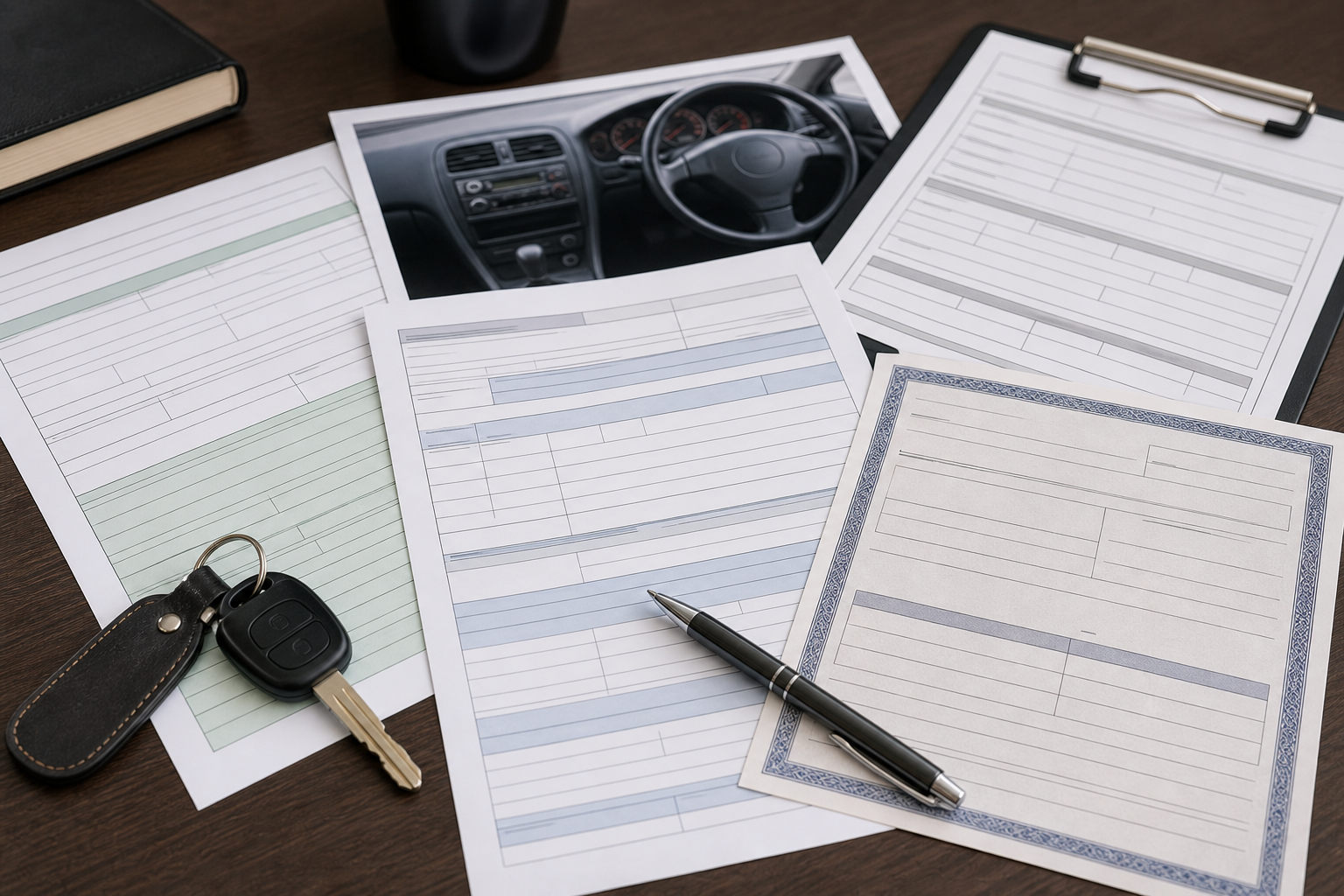
You may need:
- Japanese export certificate or other foreign ownership document
- Certified English translation for any ownership document not printed in English
- Bill of sale or purchase invoice
- CBP Form 7501 Entry Summary showing the vehicle information
- DOT Form HS-7 or other document showing customs entry/clearance and federal safety compliance or exemption
- EPA Form 3520-1, if part of the import file
- Bill of lading or arrival notice
- Bond release letter if the imported vehicle was entered under bond
- Original Vehicle Inspection Report if an applicable inspection is required
- Law Enforcement Identification Number Inspection, Form VTR-68-A
- Completed Application for Texas Title and/or Registration, Form 130-U
- Odometer reading if required
- Proof of Texas insurance
- Sales/use tax and fee payment items for the county tax office
TxDMV specifically calls out HS-7 or other customs/federal safety documentation, any bond release letter when applicable, the VIN inspection on VTR-68-A, Form 130-U, odometer information when required, proof of insurance, and the ownership document with certified English translation when needed.
The VTR-68-A VIN inspection is a big Texas item
Texas requires an imported vehicle to be inspected by a trained auto theft investigator who is a Texas law enforcement officer or part of a Texas political subdivision. TxDMV says an authorized National Insurance Crime Bureau employee may also perform these inspections.
After that inspection, the owner receives the original Law Enforcement Identification Number Inspection, Form VTR-68-A.
Do not treat this as a casual VIN check.
For JDM vehicles, the chassis number may be shorter than 17 digits and may be stamped in a location the inspector does not see every day. Make sure the vehicle is accessible, the number is clean and visible, and the documents match the number on the car.
One practical point: U.S. military personnel and immediate family members returning to Texas military bases may have a different VTR-68-A requirement under TxDMV’s military packet. That is a narrow exception, not a general JDM shortcut.
Texas inspection and emissions rules need a county check
Texas changed its inspection rules in recent years, but imported vehicle owners should not assume “no inspection” means “no compliance issue.”
TxDMV still tells imported vehicle owners to obtain a passing applicable inspection before registration. Texas DPS also says imported vehicles need the safety and emissions components for that model year installed and operational, and it flags emissions equipment and lighting equipment as common problem areas.
For emissions, DPS lists the affected counties as Brazoria, Collin, Dallas, Denton, El Paso, Ellis, Fort Bend, Galveston, Harris, Johnson, Kaufman, Montgomery, Parker, Rockwall, Tarrant, Travis, and Williamson. DPS also says Bexar County becomes an emissions county on November 1, 2026.
DPS guidance says gasoline-powered vehicles from 2 through 24 years old registered in emissions counties receive the OBDII emissions test. Many 25-year-old JDM imports will be outside that 2-through-24-year window, but timing, model year, registration county, fuel type, and classification can matter. Verify this with the county tax office or inspection station before purchase.
This is especially important around Dallas-Fort Worth, Houston, Austin, El Paso, and San Antonio, because a county line can change the practical path.
Antique plates may help some Texas owners, but they have limits
Texas antique registration can be attractive for 25-year-old vehicles because DPS says vehicles registered as antiques are exempt from annual inspection. TxDMV’s antique plate form also says vehicles at least 25 years old can receive one antique plate for a five-year period.
But antique plates are not the right answer for every importer.
Antique registration comes with use restrictions. It is generally meant for exhibition, club activities, parades, and similar limited uses, not normal daily transportation. If the buyer wants to daily-drive the vehicle, commute, or use it like a regular passenger car, standard registration may be the better route even if it brings more requirements.
Do not pick an antique plate just because it looks like an easier counter visit. Pick the registration path that matches how the vehicle will actually be used.
Texas tax and county processing can stop the transaction
Texas motor vehicle tax is handled through the county tax assessor-collector when the title transaction is submitted. The Texas Comptroller lists the motor vehicle sales tax rate at 6.25 percent of the sales price, with rules for use tax, new residents, private-party purchases, and standard presumptive value.
For imported vehicles, the county office may look closely at the bill of sale, foreign purchase documents, Customs value, and ownership chain. If the paperwork does not clearly support the transaction, tax and title processing can stall.
Plan this before the vehicle arrives. The cheapest time to fix a missing invoice, bad translation, or inconsistent chassis number is before the car leaves Japan.
Common Texas JDM mistakes
The most common Texas mistakes are not exciting, which is exactly why they get missed:
- Clearing Customs but not keeping the CBP Form 7501 Entry Summary
- Missing DOT HS-7 or EPA paperwork from the import file
- Bringing foreign ownership documents without a certified English translation
- Assuming a short Japanese chassis number will process like a U.S. 17-digit VIN
- Waiting too long to schedule the VTR-68-A law-enforcement VIN inspection
- Showing up at the county tax office with copies when originals may be needed
- Not checking emissions county rules before buying the vehicle
- Assuming antique plates are fine for regular daily use
- Using inconsistent names, addresses, or VIN/chassis formatting across documents
- Forgetting that Customs clearance and Texas title approval are two different steps
Texas is not the hardest state for 25-year-old JDM imports, but it rewards clean paperwork and punishes “we’ll figure it out at the counter.” The counter usually figures it out by telling you to come back later.
Should Texas buyers import JDM vehicles?
Often, yes.
Texas can be a practical state for federally eligible 25-year-old JDM imports if the buyer prepares the documents early and understands the state handoff.
A Texas import may make sense if:
- The vehicle is federally eligible under the 25-year rule
- The Customs entry packet is complete
- The Japanese ownership documents and translations are ready
- The chassis number is consistent across all documents
- The VTR-68-A VIN inspection is planned before the county title visit
- Insurance, tax, and county paperwork are handled before the appointment
- The buyer checks emissions and registration requirements for the correct county
It may not make sense if the seller cannot provide a clean ownership chain, the import file is missing federal documents, or the buyer is relying on antique plates for normal daily use.
Bottom line
Texas is generally a workable state for 25-year-old JDM imports, but it has a formal process.
For JDM buyers, the question is not just whether the vehicle can enter the United States. The question is whether the Texas title packet is clean enough for the county tax office to process without delay.
AWIS can help with the Customs side of a JDM import, including entry planning, CBP paperwork coordination, duty, EPA/DOT documentation, and release planning. For Texas title and registration, confirm requirements with TxDMV, Texas DPS, and the correct county tax assessor-collector before the vehicle arrives.
This article is general information, not legal advice. Texas requirements can change, county practices may vary, and inspection/emissions rules depend on county, model year, fuel type, and registration classification. Confirm requirements directly with TxDMV, Texas DPS, your county tax office, or a qualified registration specialist before purchase.
Sources reviewed
- Texas Department of Motor Vehicles, Out of State and Imported Vehicles
- Texas Department of Public Safety, Inspection Criteria for Emission Inspection
- Texas Department of Public Safety, Unique Vehicles
- U.S. Customs and Border Protection, Registering a foreign vehicle or motorcycle with the Department of Motor Vehicles
- Texas Comptroller, Motor Vehicle Sales and Use Tax